

If your brand isn't being mentioned by ChatGPT, Perplexity, or Gemini, you're invisible to a growing slice of your market — and you probably don't even know it.
Search behavior has shifted. Millions of buyers now open an AI assistant instead of Google when they want a recommendation, comparison, or answer. They ask "what's the best CRM for a SaaS startup?" or "which brand monitoring tool should I use?" — and the AI answers without ever surfacing a list of blue links. If your brand isn't cited in those answers, you don't exist in that moment of intent.
That's why AI visibility tracking has gone from a nice-to-have experiment to a core marketing metric. This guide breaks down what it is, why it matters, and exactly how to start measuring it.
What Is AI Visibility Tracking?
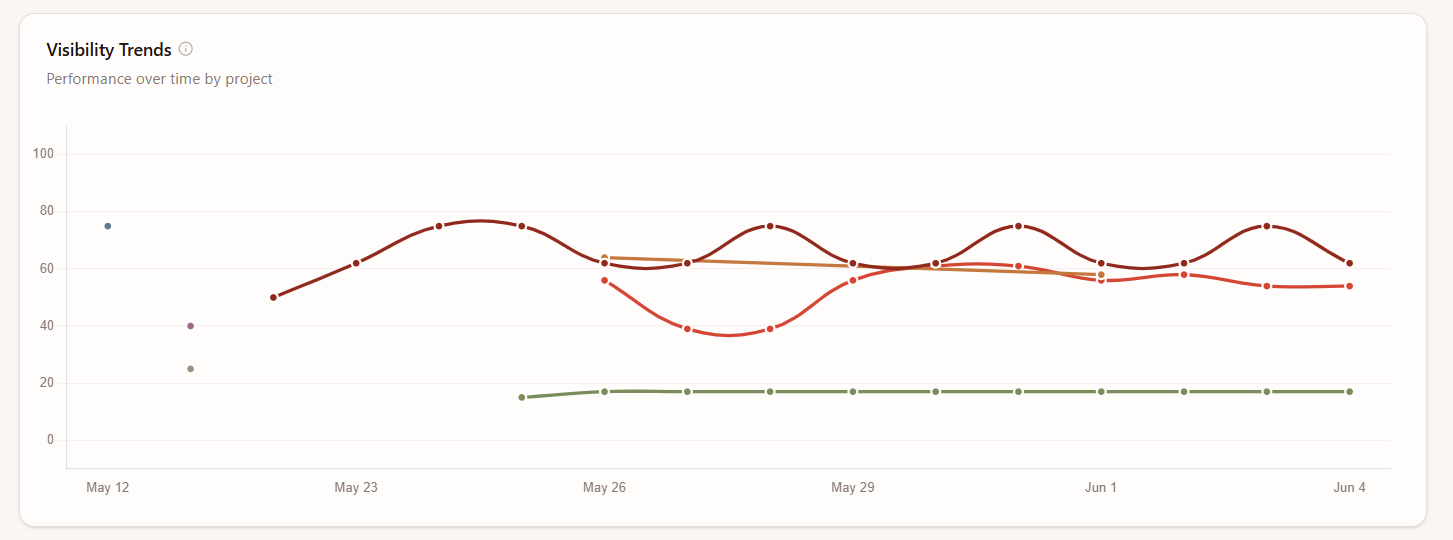
AI visibility tracking is the practice of monitoring how often, how accurately, and how favorably your brand appears in responses generated by large language models (LLMs) like ChatGPT, Perplexity, Gemini, Claude, and Grok.
Think of it as the AI-era equivalent of rank tracking in traditional SEO — except instead of measuring where your URL lands on a results page, you're measuring:
Mention rate: How often your brand is named in AI-generated answers to relevant queries
Citation accuracy: Whether the AI is describing your product, pricing, and positioning correctly
Sentiment: Whether the references are positive, neutral, or negative
Share of voice: How your mention rate compares to direct competitors
Platform coverage: Which AI engines mention you vs. which ones ignore you
LLM Visibility is no longer a vanity metric. For brands in competitive categories, it directly influences purchase decisions at the moment of highest intent.
Why AI Visibility Tracking Matters Right Now
The Zero-Click Shift Is Accelerating
Google's own research shows that AI Overviews now appear on a significant portion of commercial queries. Perplexity processes hundreds of millions of searches per month. ChatGPT has crossed 300 million weekly active users. Each of those interactions is a potential moment where your brand could — or could not — be recommended.
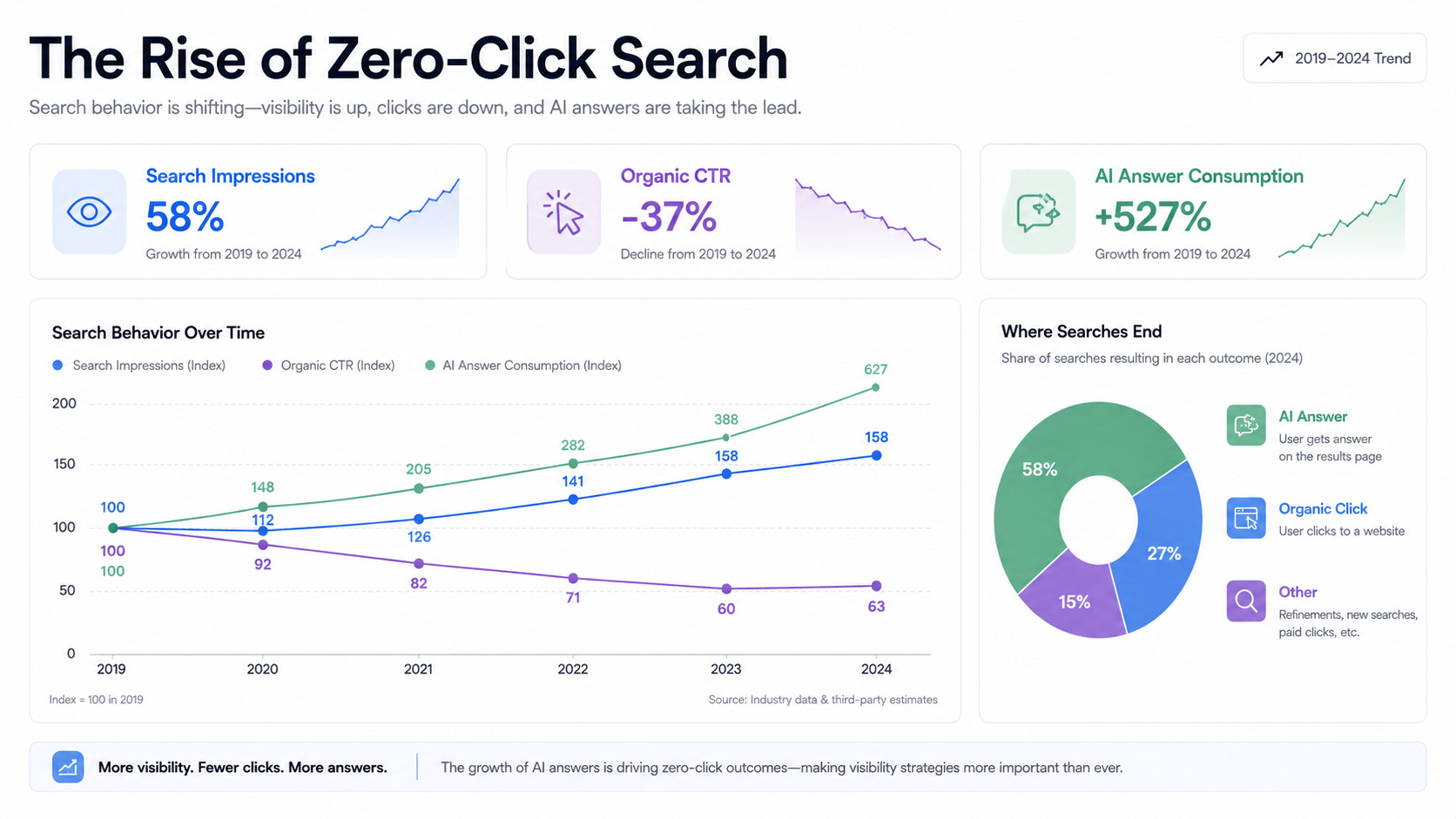
Unlike traditional search, AI responses often deliver a single answer or a short list. There's no page 2. If you're not in the first response, you're not in the consideration set.
Your Competitors Are Already Being Tracked
Forward-thinking brands and agencies are already running structured prompt sets against multiple AI engines every week. They know their LLM Brand Visibility score. They know when a competitor gains ground in ChatGPT's recommendations. They know which AI platforms they're strong on and which they need to optimize for.
Brands that haven't started tracking are flying blind — and losing ground they don't know they're losing.
AI Answers Don't Always Get It Right
Brand hallucination is real. LLMs confidently state wrong prices, discontinued features, old positioning, or attribute a competitor's capability to your brand. Without active AI visibility tracking, these errors go uncorrected and compound over time as other AI systems train on the same incorrect information.
How to Set Up AI Visibility Tracking
Step 1: Define Your Prompt Set
Your prompt set is the foundation of your tracking program. These are the queries — questions, comparisons, category searches — that your ideal customer might type into an AI assistant.
Good prompts to track include:
Category queries: "What are the best [category] tools?"
Problem-solution queries: "How do I track my brand in AI search?"
Comparison queries: "[Your brand] vs [Competitor]"
Specific feature queries: "Which tool has the best [feature]?"
Recommendation queries: "What [category] tool should a [persona] use?"
Aim for 20–50 prompts to start, covering the full funnel from awareness to decision.
Step 2: Run Prompts Across Multiple LLMs
A single AI engine is not your whole market. Run your prompt set against at minimum:
ChatGPT (OpenAI) — largest user base, highest commercial intent
Perplexity — citation-heavy, increasingly used for research and buying decisions
Gemini — deep Google integration, growing fast
Claude (Anthropic) — strong in technical and B2B contexts
Grok (xAI) — emerging, especially in tech-adjacent communities
Your brand's visibility profile will differ meaningfully across these platforms, and each requires a different optimization strategy.
Step 3: Track and Log Systematically
Manual tracking doesn't scale. You need a structured way to log which prompts mention your brand, record the full response for sentiment and accuracy analysis, calculate your mention rate per prompt set per platform, and compare your score against competitors.
Tools like LLM Search Console automate this entire process — running your prompt set on a regular cadence, tracking your AI share of voice, flagging inaccuracies, and giving you a dashboard that shows your LLM Brand Visibility over time.
Step 4: Analyze the Data
Once you have tracking in place, look for gaps (prompts where competitors appear but you don't), inaccuracies (responses where your brand is mentioned but described incorrectly), platform asymmetries (AI engines where you're strong vs. weak), and trend lines (is your mention rate growing or declining week over week?).
Step 5: Act on What You Find
Tracking without action is just monitoring. Use your findings to update your content to cover topics where AI engines aren't citing you, improve your entity authority by getting your brand facts consistently stated across high-authority sources, build structured data that makes your key claims more extractable by LLMs, and correct inaccuracies by publishing clear, authoritative content that overrides hallucinated information.
Key Metrics to Track
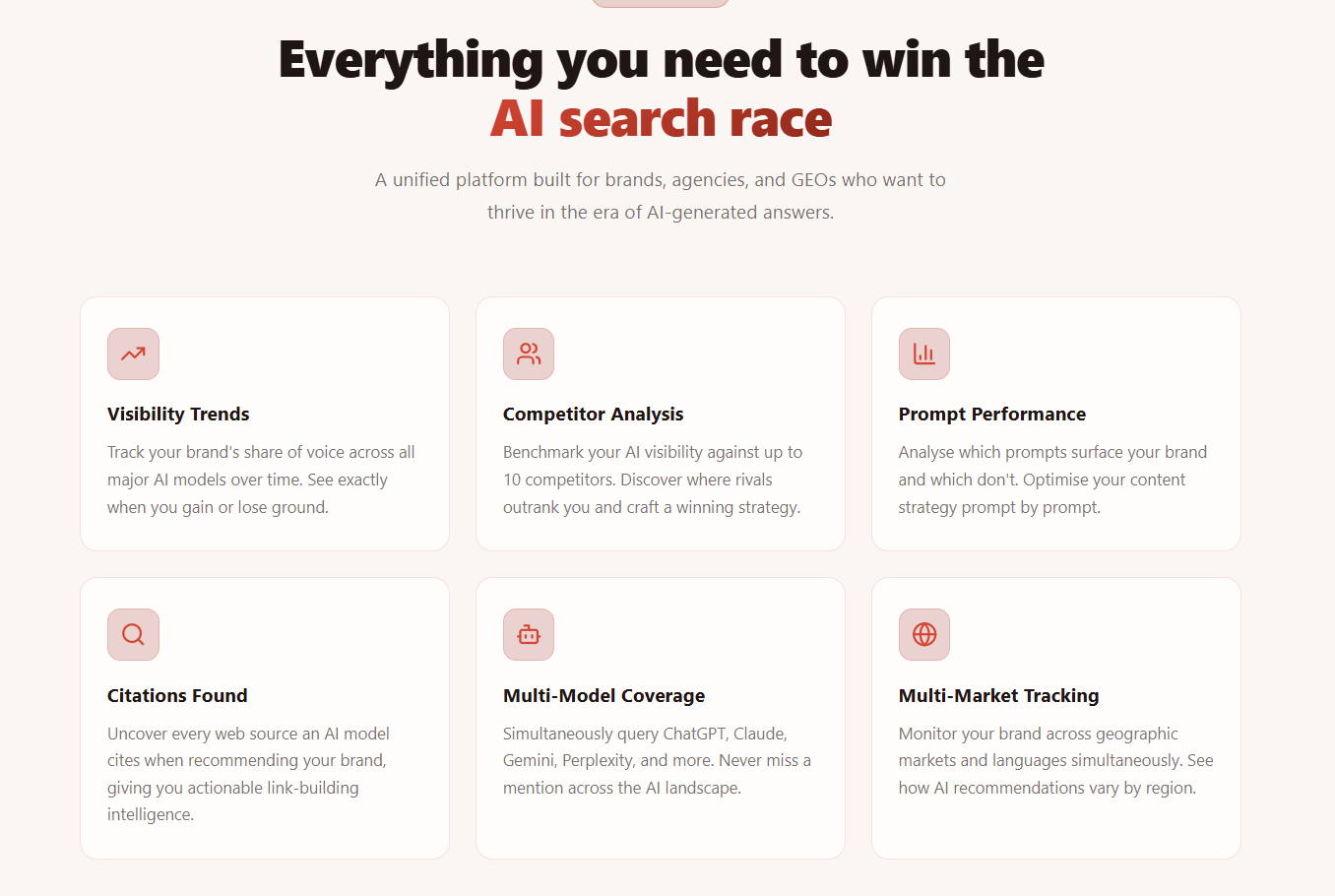
The six core metrics every brand should monitor are: Mention Rate (% of prompts where your brand is named), AI Share of Voice (your mention rate vs. competitors), Citation Accuracy (% of mentions that correctly describe your product), Sentiment Score (ratio of positive to negative brand mentions), Platform Coverage (which AI engines cite you and how often), and Visibility Trend (change in mention rate over time).
Common Mistakes to Avoid
Tracking only ChatGPT. ChatGPT matters, but Perplexity's citation-heavy format and Gemini's Google integration make them high-value channels to monitor independently.
Using inconsistent prompts. If your prompts change each week, you can't measure trends. Define a stable core prompt set and run it consistently.
Ignoring accuracy. A mention that gets your pricing wrong or describes an old feature can do more harm than not being mentioned. Accuracy tracking is as important as presence tracking.
Not tracking competitors. Your absolute mention rate matters less than your relative share of voice. Always track your top 3–5 competitors alongside your own brand.
Treating it as a one-time audit. AI models update continuously. A snapshot from three months ago is not an accurate picture of your visibility today. Weekly or bi-weekly tracking is the minimum for actionable data.
The Bigger Picture: AI Visibility as a Core Marketing KPI
We're still early. Most brands don't have a structured AI visibility tracking program. Most CMOs don't know their LLM mention rate. That's a competitive window — and it won't stay open long.
The brands that move now will establish presence in AI training pipelines, build the content authority that gets them cited consistently, and accumulate the historical data to understand what's working. The brands that wait will be playing catch-up against competitors who already own the answers.
LLM Brand Visibility is becoming as fundamental as organic search ranking. The measurement infrastructure needs to be in place before optimization can happen — which means now is the time to start.
Start Tracking Your AI Visibility Today
The first step is knowing where you stand. Run a manual spot-check: open ChatGPT and Perplexity, search for your category, and see if your brand shows up. Chances are the results will surprise you — in one direction or another.
Then, when you're ready to move beyond manual spot-checks to systematic, automated AI visibility tracking across all major LLM platforms, LLM Search Console is built exactly for that.
Want weekly insights on AI visibility, LLM optimization strategies, and what's working right now? Subscribe to this newsletter and join thousands of marketers, founders, and brand managers who are building their AI search presence before the window closes.