

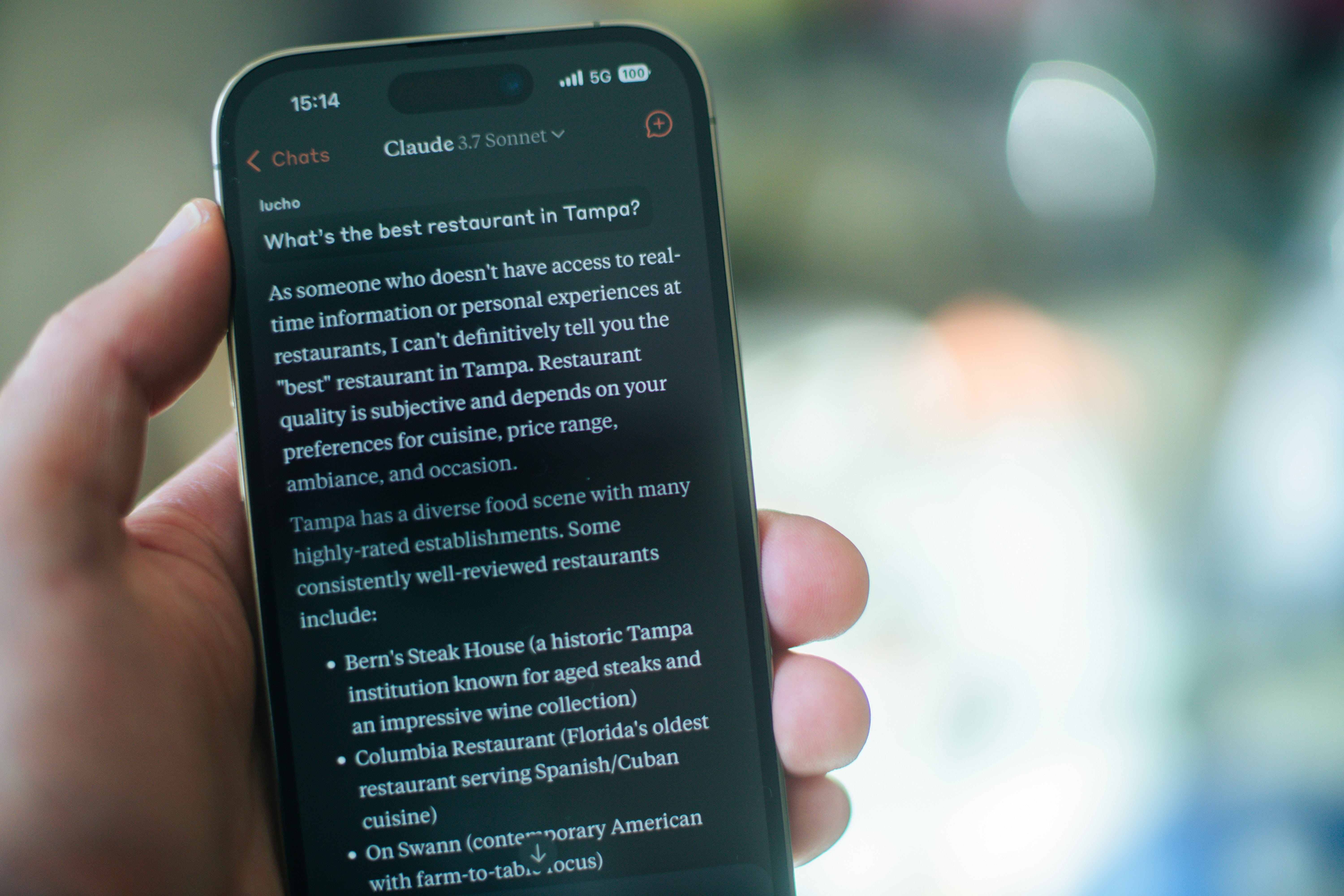
The digital landscape just shifted. Your customers aren't just Googling anymore—they're asking ChatGPT, Perplexity, and Gemini. And if your brand isn't showing up in those answers, you're losing out to competitors who are.
Brand visibility on LLMs isn't optional anymore. It's foundational to staying relevant.
Here's what you need to know, and more importantly, what you need to do about it.
The LLM Search Revolution Changed Everything
For decades, SEO meant one thing: Google rankings. You optimized for search intent, built backlinks, and watched your organic traffic climb.
Then came the LLMs.
ChatGPT hit 100 million users in two months. Perplexity became the "Google killer" everyone was talking about. Google launched AI Overviews. Microsoft built Copilot. Even Elon launched Grok.
But here's the plot twist: most brands have no idea if they're even being mentioned in these systems.
When someone asks ChatGPT "What's the best project management tool?" or asks Perplexity "Which marketing platform offers the best AI features?"—is your brand in that answer?
Probably not. And that's costing you leads, trust, and revenue.
Why LLM Visibility Is Different (And Harder) Than Google SEO
Traditional SEO is algorithmic and measurable. You know your keyword rankings. You know your click-through rates. Google Analytics tells you exactly how much traffic each keyword drives.
LLM visibility is different:
It's opaque. You can't see the exact ranking factors. You don't know what prompt was used to generate the answer. You can't track exactly how many impressions you're getting.
It's volatile. An answer could include your brand today and not tomorrow. The LLM might generate a completely different response for a slightly different phrasing of the same question.
It's not tracked by traditional tools. Your Google Search Console won't show LLM impressions. Your analytics can't automatically attribute traffic from ChatGPT responses.
It requires different content strategies. The factors that rank you in Google (backlinks, keyword density, page speed) aren't the same factors that get you cited in LLM answers. LLMs care about authority, relevance, and how prominently your brand appears in training data.
But here's the good news: just because it's harder doesn't mean it's impossible.
The Three Pillars of Brand Visibility on LLMs
Getting your brand in front of LLMs requires a different approach. Here are the three core strategies:
1. Own Your Entity Authority
LLMs are trained on patterns in text. Entities—brands, people, companies—are central to how these models understand the world.
How to build entity authority:
Claim and optimize your Wikipedia page (if you have one). LLMs are trained heavily on Wikipedia data.
Ensure consistent brand naming across the web. Don't be "Acme Inc." on your website, "acme-corp" on Twitter, and "The Acme Company" on LinkedIn.
Get mentioned in authoritative sources relevant to your industry. A mention in TechCrunch carries more weight than a mention on a random blog.
Build topical authority in your niche. If you're a sales tool, become the resource for sales methodology, sales training, and sales team management.
When your brand is consistently associated with specific topics and mentioned by authoritative sources, LLMs learn to connect your brand to those topics.
2. Create Content That Gets Cited
LLMs don't generate answers from thin air. They synthesize information from their training data, which includes articles, research papers, blog posts, and web content.
Content that LLMs cite:
Original research and data. LLMs gravitate toward sources that present fresh insights. If you conduct original research in your industry, publish it publicly and cite it in other content.
Detailed frameworks and methodologies. "The X Framework for Y" content gets cited because it's specific, attributed, and useful.
Comparative analysis. When someone asks "How does Tool A compare to Tool B?" LLMs draw from comparative content. If you're the source, you get cited.
Authoritative guides and definitions. "What is X?" content that provides the clearest, most comprehensive definition tends to get synthesized into LLM responses.
The key: make your content so valuable and authoritative that LLMs can't generate a good answer without citing you.
3. Optimize for Platform-Specific Characteristics
ChatGPT: Gets trained on web data up to a certain cutoff date. Tends to cite content it "remembers" seeing frequently across the web.
Perplexity: Explicitly cites sources. If you're mentioned in Perplexity answers, you're getting an actual citation and clickthrough potential.
Google AI Overviews: Pulls from Google's index. Better for traditional SEO-optimized content, but requires entity authority on Google's property.
Claude: Trained on diverse data sources. Emphasizes nuance and accuracy.
Your strategy: Don't try to optimize for all of them the same way. Create content that's specifically designed for how each LLM works.
For Perplexity, optimize for citation potential and freshness. For ChatGPT, focus on becoming a widely-referenced source. For Google AI Overviews, traditional SEO authority still matters.
How to Measure Brand Visibility on LLMs
You can't improve what you don't measure. Here's how to track your LLM visibility:
Manual auditing (free, but time-consuming):
Ask each LLM the same 10-20 questions related to your product category
Document whether your brand appears
Note the context (mentioned positively? As an alternative? Not mentioned at all?)
Repeat monthly
Dedicated tools (more accurate and scalable):
Use a brand monitoring platform specifically designed for LLMs (like LLM Search Console, Profound, or Otterly AI)
Track your "mention rate"—the percentage of relevant queries where your brand appears
Monitor competitor visibility to benchmark your performance
Get sentiment analysis—are mentions positive, neutral, or negative?
The key metrics to track:
Mention Rate: What % of relevant queries include your brand?
Share of Voice: What % of total mentions in your category go to your brand vs. competitors?
Citation Quality: Are you getting cited as a primary source or mentioned in passing?
Citation Sentiment: Are mentions positive, neutral, or negative?
If your mention rate is 15% and your top competitor is at 45%, you have a clear opportunity.
The Action Plan: Next Steps for Your Brand
Ready to improve your visibility on LLMs? Here's where to start:
Audit your current state. Spend 30 minutes asking ChatGPT, Perplexity, and Google AI Overviews questions in your category. See where you appear.
Identify your biggest gaps. Are you missing from certain query types? Underrepresented compared to competitors? Write those down.
Audit your entity authority. Do you have a Wikipedia page? Is your brand consistently named everywhere? Are you mentioned in industry-relevant authoritative sources? Create a list of quick wins.
Map your content strategy. Which framework, research, or comparative content could you create that would be too valuable for LLMs to ignore?
Start publishing. Create one high-authority piece of content per month designed specifically to be cited by LLMs. Make it comprehensive, original, and authoritative.
Measure monthly. Set up a simple spreadsheet and manually audit your visibility once a month. Watch the trend.
The Bottom Line
Brand visibility on LLMs is the next frontier. It's not a replacement for traditional SEO—it's a complement to it.
The brands winning right now are the ones who moved first. They're not waiting for the "best practices" articles. They're experimenting, iterating, and building visibility while their competitors are still debating whether LLMs matter.
Your move: Will you be invisible in the LLMs your customers are asking, or will you be the brand they recommend?
Ready to take control of your LLM visibility? Sign up for LLM Search Console and start tracking where your brand appears across ChatGPT, Perplexity, Gemini, Claude, and more. Get weekly insights on your mention rate, competitive benchmarking, and actionable recommendations to improve your visibility.
Subscribe to the newsletter to stay ahead of the latest in AI search visibility, brand monitoring, and LLM optimization.