

Function calling just stopped being a footnote in LLM docs. In 2026, it's the critical path between thought and action—and most GEO practitioners still treat it like an afterthought. That's your competitive advantage window.
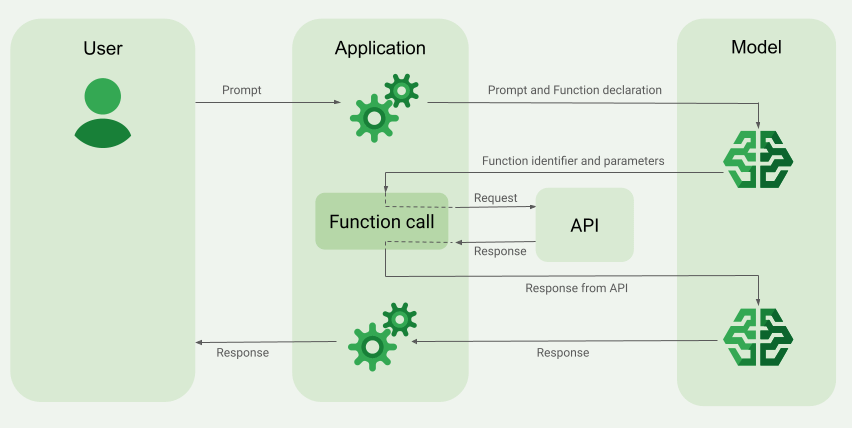
The shift is quiet but seismic. Answer engines (ChatGPT, Claude, Gemini) aren't picking random brands out of thin air anymore. They're selecting from candidates based on reliability. Which APIs don't timeout? Which endpoints return structured data the agent can parse? Which brands have defined "functions" the model can trust?
If your brand isn't callable—if you haven't exposed reliable function definitions—you're invisible to the agent loops that actually execute. And LLM Search Console tracks this layer for you.
The Myth of "Smart Prompting" vs. Reliable Action
Every GEO article published in the last 18 months has hammered on prompt engineering and CoT reasoning chains. True. But you can have the most elegant reasoning in the world and still lose if function calling breaks.
Here's what nobody talks about: When a ChatGPT agent decides your brand is relevant, the next question isn't "what should I think?" It's "can I reliably execute?" If your API endpoint doesn't return consistent schemas, has a 2-second timeout, or throws parsing errors—the agent walks away and picks a competitor who doesn't.
Function schemas are your SLA with answer engines. Get this wrong and your share of voice collapses.
Three Hidden Intersections Most GEO Teams Miss
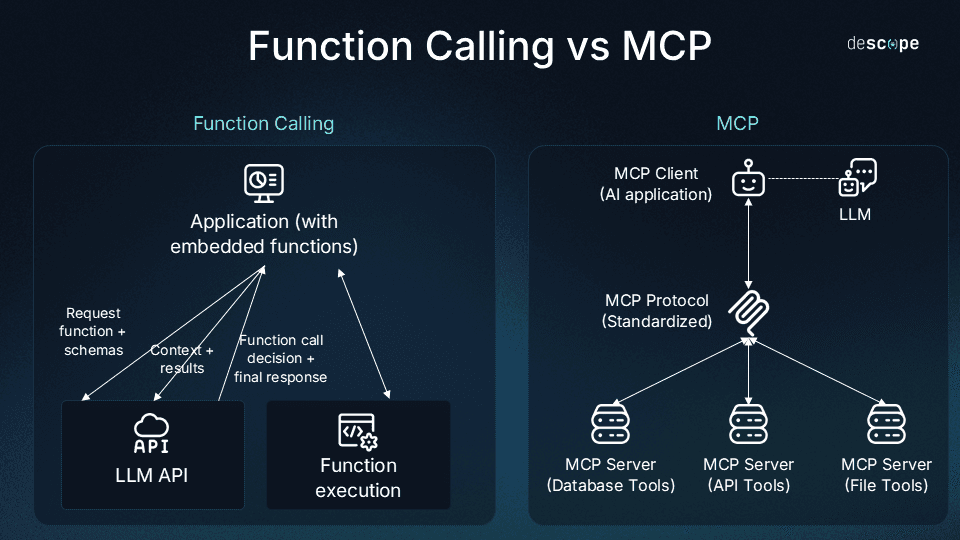
1. Function Calling + Context Window Economics
Longer context windows (1M+ tokens) don't magically make agents smarter. They create a new problem: token bloat in function definitions. Every function parameter, description, and example eats context. Smart agents now prune function definitions based on relevance signals. Your brand's functions either get called or get dropped from the context—depending on whether the agent ranked you as "likely useful." RAG-grounded function selection is now a thing, and most orgs don't even know they're being filtered.
2. Function Calling + RAG Hybrid Filtering
It's not pure vector search anymore. When an agent needs "industry analytics for tech companies," it doesn't just retrieve documents—it also filters your callable functions through semantic relevance. If your functions are poorly documented (generic descriptions, no concrete examples), they get downranked even if your underlying API is solid. The docs become GEO content. This is the quiet battleground.
3. Function Calling + Share of Voice in Answer Chains
Answer engines now serialize function calls in visible reasoning traces. When Claude or ChatGPT shows working in an answer, users see which brands got "called." If your function gets invoked (and returns clean data), you get visible attribution. If it fails or times out, you're invisible AND the agent learns not to call you again. This is reputation compounding in real-time.
Why Your Competitors Are Already Losing Here
Most orgs are still playing the 2024 GEO game: "get in RAG," "be cited," "own the context window." They've missed the transition to agent-executable brands. They haven't:
Audited their API response latency under agentic load
Optimized function schema clarity for LLM parsing
Monitored which functions get dropped from agent context
Built fallback patterns when agents need retry logic
This creates a widening gap. Brands with tight function definitions and reliable endpoints become "default callable," while others become invisible the moment an agent hits a timeout or parse error.
Quick Wins for Function Calling GEO
Publish explicit function schemas on your developer docs. Make them bot-crawlable. Include timeout guarantees and error handling patterns.
Audit your API response times under concurrent load. Anything over 1 second is a GEO liability.
Test function schema parsing with Claude or GPT-4. Run synthetic agent queries and log which functions get selected/dropped.
Monitor share of voice in answer chains. Use LLM Search Console to track which of your functions appear in visible reasoning traces.
Build idempotency into functions. Agents will retry on transient failures. Make sure your endpoints are safe to call twice.
This is where GEO moves next. The brands winning in 2026 aren't just getting cited—they're being reliably called. Your function definitions are your new brand moat.
Track how answer engines actually interact with your functions—where you get called, where you get dropped, and which competitors are winning share of voice. LLM Search Console now monitors function calling patterns across ChatGPT, Claude, and Gemini. Start here.
Function calling flipped the entire GEO stack. Context window + function specificity = deterministic answers. Most are still optimizing for engagement metrics. The ones betting on function-driven retrieval will own answer engines.