

Your best-performing page can rank first on Google and still be absent from every answer ChatGPT gives about your category. Those are two separate systems now, and only one of them is growing.
Generative engine optimization is the practice of making a brand retrievable, quotable, and citable by AI systems that generate answers instead of listing links. ChatGPT, Perplexity, Gemini, Google AI Overviews, Claude, Copilot. Different retrieval stacks, same underlying job: assemble a response from sources the model can find and trust, then hand the user a finished answer.
The user never sees the ten blue links. That's the whole shift. Your ranking is no longer a position — it's whether you exist inside the paragraph.
What GEO actually optimizes for
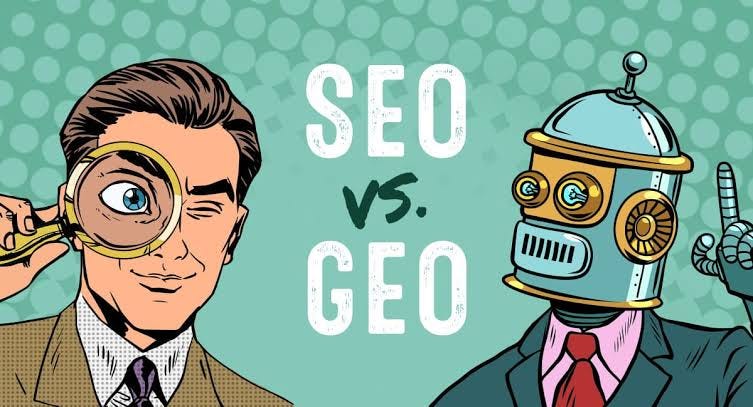
Traditional SEO optimizes for a ranked list. GEO optimizes for inclusion in a synthesized response, which behaves differently in three ways worth understanding before you spend a euro on it.
Retrieval replaces crawling as the bottleneck. A model doesn't index your site the way a search crawler does. It pulls from training data, from live retrieval against a search index, and from whatever grounding layer the provider has bolted on. Your page has to survive all three paths, and they don't share the same rules.
Extraction replaces clicks. The model lifts a claim, a number, a definition — and either attributes it or doesn't. Content built to hold attention across 2,000 words of narrative gives a model very little to extract. Content built around discrete, verifiable statements gives it plenty.
Consensus replaces authority signals. Backlinks still matter indirectly, but what moves an answer is how consistently your brand is described across independent sources. When five reputable pages describe you the same way, the model treats that description as fact. When they contradict each other, the model routes around you and names a competitor it can describe cleanly.
The four inputs that decide whether you get cited
Most GEO advice collapses into "write good content." That's not a strategy. Here's what actually determines inclusion.
Entity clarity comes first. The model needs to know what you are before it can recommend you, and that means a consistent category descriptor everywhere your brand appears — your site, your Crunchbase profile, your G2 listing, your Wikipedia entry if you have one, your founders' LinkedIn bios. If your homepage says "revenue intelligence platform" and your G2 category says "sales analytics software," you've split your own entity in two.
Source presence decides the rest. Models lean heavily on a small set of high-trust domains for category questions: review platforms, industry publications, Reddit, community forums, and comparison sites. Being excellent on your own domain and absent everywhere else is the single most common reason a well-run content program produces zero AI visibility. Third-party presence is not a PR nice-to-have here. It's the retrieval substrate.
Then there's structure. Answer the question in the first two sentences under each heading, then support it. Use headings that match how buyers phrase the question, not how your product team names features. Put comparison data in actual tables. Define your terms explicitly, because definitional sentences get lifted verbatim more often than anything else you write.
Last, make it verifiable by machine. Schema markup, clean HTML, no critical content locked behind JavaScript rendering, dates on everything. Grounding systems check claims against retrievable sources. Content that can't be parsed or dated is content that can't be verified, and unverified claims get dropped from answers.
A sequence that works
Skip the audit-everything phase. Run it in this order.
Start by measuring where you stand. Build a prompt set of 30 to 60 questions drawn from sales calls, support tickets, and your paid search query report — real buyer language, not category jargon. Run them across the models your buyers use, and record whether you appear, who else does, and what sources got cited. This is your baseline for LLM brand visibility, and without it every subsequent decision is a guess.
Then read the citations, not just the mentions. The sources the model quotes when it answers your category questions are your target list. If Reddit threads and one industry roundup are doing all the work, that's where the next quarter goes — not into another blog post on your own domain.
Fix the entity layer next, because it's cheap and it compounds. Standardize your category descriptor across every property you control and every profile you can edit. It takes a week and it removes ambiguity the model has to resolve on its own.
Restructure the pages that already almost rank. Front-load answers. Add tables. Break the wall of prose into sections that map to distinct questions. You're not rewriting for readers — you're rewriting for extraction, and the two goals overlap more than you'd expect.
Go earn third-party presence last, because it's the slowest and most expensive input. Review platform listings, comparison pages, expert roundups, podcast appearances that get transcribed, community answers where your team actually helps someone. Slow work. Highest ceiling.
What GEO does not do
Two corrections, because the category is full of overpromising.
There is no rank in an AI answer. Position within a generated response shifts across re-runs of the identical prompt. Any vendor selling you an "AI rank tracker" with a stable position number is selling noise. Track visibility rate and share of voice instead — those hold up.
And GEO does not replace SEO. Google AI Overviews draw heavily from pages that already rank organically. Perplexity runs live search. Your organic footprint is an input to the generative layer, not a competitor to it. Teams that gut their SEO program to fund GEO usually watch both numbers fall.
The measurement problem nobody mentions
AI answers are non-deterministic. Ask the same question twice and get two different responses. This breaks the mental model most marketers bring from rank tracking, where a number moves and you know why.
The fix is sampling. Run each prompt multiple times, across multiple models, on a repeating schedule, and report the rate rather than the instance. Appearing in 34 of 100 runs is a real number. Appearing once in a screenshot someone posted in Slack is not.
Weekly cadence at minimum. Model updates and index refreshes move these figures without warning, and a monthly snapshot will have you explaining a swing that already reversed.
Where this goes next
The gap between organic ranking and AI visibility is currently the largest arbitrage in marketing. Most competitors haven't measured it. Some have never looked. The teams building prompt sets and tracking citations right now are the ones whose category descriptions the models will treat as settled fact in eighteen months.
Start with the baseline. Run 30 buyer-language prompts across ChatGPT, Perplexity, and Gemini this week, and write down who gets named. If it isn't you, you now have the only diagnostic that matters — and a list of the exact sources standing between your brand and the answer.
Subscribe for the weekly breakdown on measuring and improving AI brand visibility, including the prompt frameworks and citation-gap methods we use with brands working this problem now.