

Most GEO advice still treats "getting cited by ChatGPT" as a content problem: write good pages, sprinkle schema markup, hope a vector search retriever finds you. That model is already obsolete. The retrieval layer behind modern answer engines isn't a flat similarity search anymore — it's a pipeline of graph traversal, multi-agent verification, and inference-time reasoning loops. If you're optimizing for the old pipeline, you're optimizing for a stage that no longer decides what gets cited.
Here are three intersections between GraphRAG, multi-agent orchestration, and test-time compute that rarely get discussed together — and why they determine whether your brand shows up in an AI answer at all.
1. GraphRAG turns citations into multi-hop decisions, not single lookups
Vector search answers one question: "what chunk of text is semantically close to this query?" GraphRAG answers a different one: "what entities are connected to this query, and how?" When an agent needs to answer "which platforms track brand visibility across LLMs and how do they compare to traditional analytics," a vector index returns whichever page mentions those words most densely. A knowledge graph instead walks from "AI visibility" to "tracking platform" to "comparison" to "category leaders," assembling an answer from relationships, not just text proximity.
The hidden consequence: if your brand isn't represented as a node with explicit relationships — to a category, to competitors, to use cases — you're structurally absent from multi-hop traversal, even if your content is semantically perfect. Dense prose about "AI search visibility" does nothing if there's no entity graph connecting your product to the concept "GEO platform."
2. Critic agents are quietly re-verifying every citation before it ships
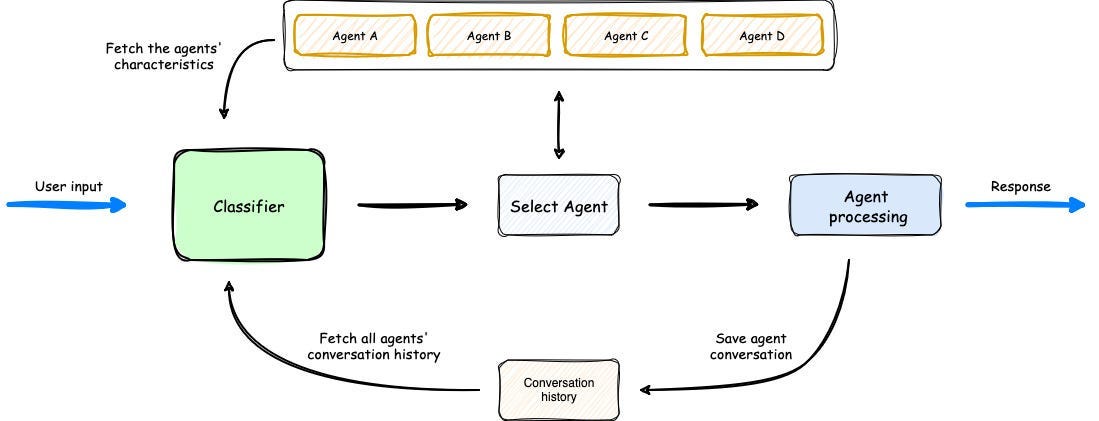
Multi-agent orchestration didn't just add speed — it added a fact-checking layer. A typical 2026 agent loop looks like: planner drafts an answer, retriever pulls sources, a separate critic agent cross-checks each claim against retrieved evidence, and only verified claims survive to the final response. This is the practical implementation of grounding.
The intersection nobody talks about: the critic agent is usually a smaller, cheaper model than the planner, and it's graph-aware. It doesn't re-read your whole page — it checks whether the claim matches a structured fact it can verify quickly. A claim like "X is a leading GEO platform" gets dropped unless there's a verifiable, structured anchor (a comparison table, a dated benchmark, a named category with sources). Unstructured marketing language is exactly what critic agents are tuned to discard.
3. Test-time compute means more reasoning steps touch your content — or skip it entirely
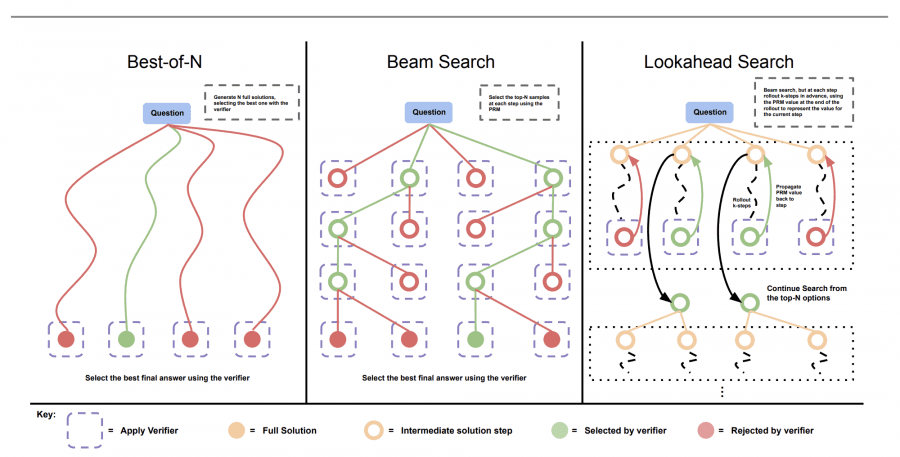
System 2-style models that "think before they speak" run dozens of internal reasoning steps before producing an answer. Each step can trigger a fresh retrieval or graph query. More compute at inference time should mean more chances for your content to surface somewhere in the chain.
But it cuts both ways. Each additional reasoning step is also another filter. A model doing five-step reasoning before mentioning a brand will, at each step, re-evaluate whether that brand still belongs in the answer given everything reasoned so far. Brands with thin, single-purpose content tend to survive step one and get pruned by step three, when the model starts cross-referencing for consistency. The brands that survive to the final output are the ones whose facts hold up under repeated internal scrutiny — which again comes back to structured, verifiable, internally consistent information.
4. The hidden bottleneck: quantized verifier agents have smaller context windows than you think

While planner models increasingly run with million-token context windows, the quantized, distilled critic and retrieval-ranking agents that actually gate citations often run with far smaller effective context — and worse recall even within that window. This is the quiet cost of the efficiency stack (MoE routing, LoRA-adapted verifiers, quantized inference) that makes agent swarms affordable to run at scale.
Practical effect: if the facts that justify citing your brand are buried on page four of a long PDF or scattered across a 3,000-word article, the verifier agent may never see them in its working context. The facts that get cited are the ones sitting in the first few hundred tokens of a page, repeated in a structured snippet (a definition, a stat, a comparison row) that a small model can extract without needing the full document in context.
Quick wins for GEO
Build an explicit entity graph for your brand — category, competitors, use cases, and named relationships, not just keyword-stuffed prose.
Front-load verifiable facts — stats, definitions, and comparisons in the first 100-200 words, where small verifier models actually look.
Make claims falsifiable and dated — "as of Q2 2026, X tracks visibility across 6 AI engines" survives critic-agent checks; "industry-leading" does not.
Publish structured comparison content — tables and side-by-side breakdowns are exactly the shape GraphRAG and critic agents can traverse and verify quickly.
Track what's actually happening — you can't optimize for a pipeline you can't see. LLM Search Console shows how ChatGPT, Claude, Gemini, and Perplexity currently represent your brand, your competitors, and your category — the closest thing to a window into the graph these agents are reasoning over.
The throughline across all three intersections is the same: agentic answer engines reward structure, verifiability, and graph-shaped relationships over volume of unstructured content. GEO in 2026 isn't about writing more — it's about making the facts about your brand legible to a system that's checking its own work.