
Your customers have stopped Googling. They're asking ChatGPT, Perplexity, Gemini, and Claude instead — and those models are quietly deciding whether your brand gets recommended, ignored, or misrepresented. The problem? Most marketers have no idea what AI is actually saying about them. If you can't see it, you can't fix it. This guide shows you exactly how to check brand visibility in AI, what to measure, and how to turn a one-time audit into an always-on system.
Why Checking Your AI Visibility Matters Right Now
AI assistants now sit between your brand and your buyer at the most important moment: the recommendation. When someone asks "what's the best project management tool for agencies?" or "which CRM should a small B2B team use?", the model returns a short list — and if you're not on it, you don't exist in that conversation.
This is a fundamentally different game from traditional search. There's no page two to crawl to, no ten blue links to compete over. There's one answer, and a handful of brands cited inside it. That scarcity is why LLM brand visibility has become the metric that actually predicts pipeline in 2026
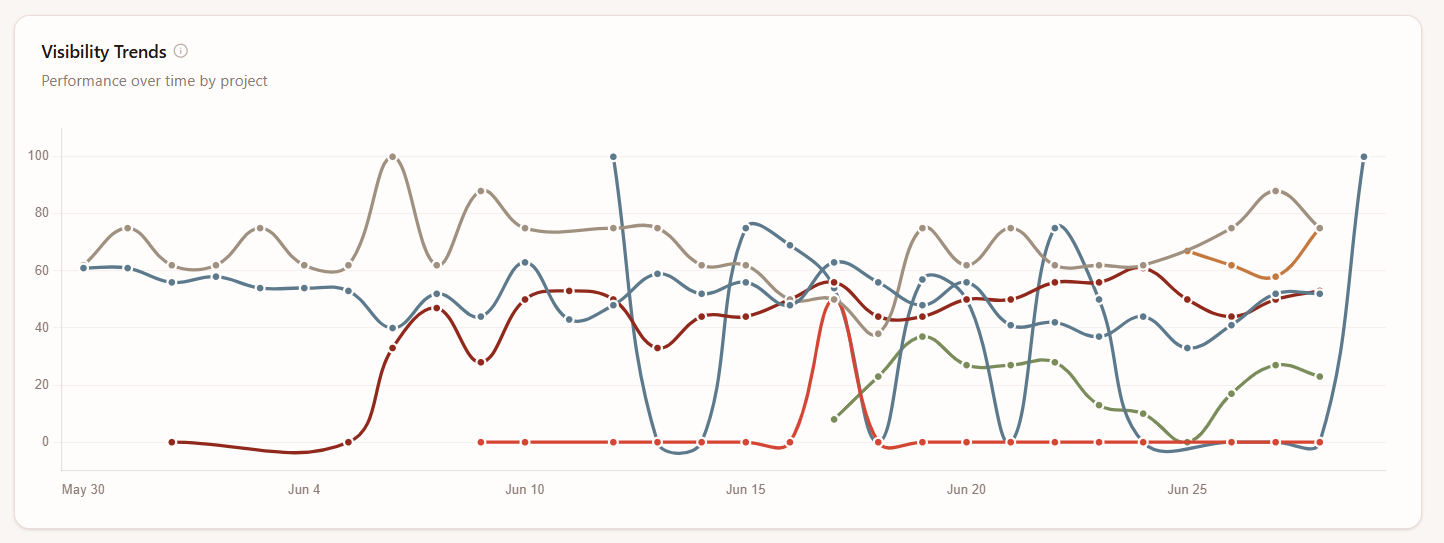
The catch is that AI answers are invisible by default. They're personalized, they change daily, and they never show up in your analytics. A brand can lose 40% of its recommendation share over a quarter and not notice until revenue dips. Checking your visibility isn't a vanity exercise — it's early-warning infrastructure.
What "Brand Visibility in AI" Actually Means

Before you check anything, get clear on what you're measuring. Visibility in AI search breaks down into a few distinct signals:
Mention rate — how often your brand appears at all when relevant prompts are asked.
Recommendation rate — how often you're actively recommended, not just mentioned in passing.
Share of voice — your presence relative to named competitors for the same prompts.
Sentiment — whether the model describes you positively, neutrally, or with outdated or wrong information.
Citations — which sources the model pulls from when it talks about you (critical for Perplexity and Google AI Overviews).
Tracking a single ChatGPT answer tells you almost nothing. Real LLM visibility measurement comes from running a representative set of prompts, across multiple models, repeatedly over time.
How to Check Brand Visibility in AI: A 5-Step Method
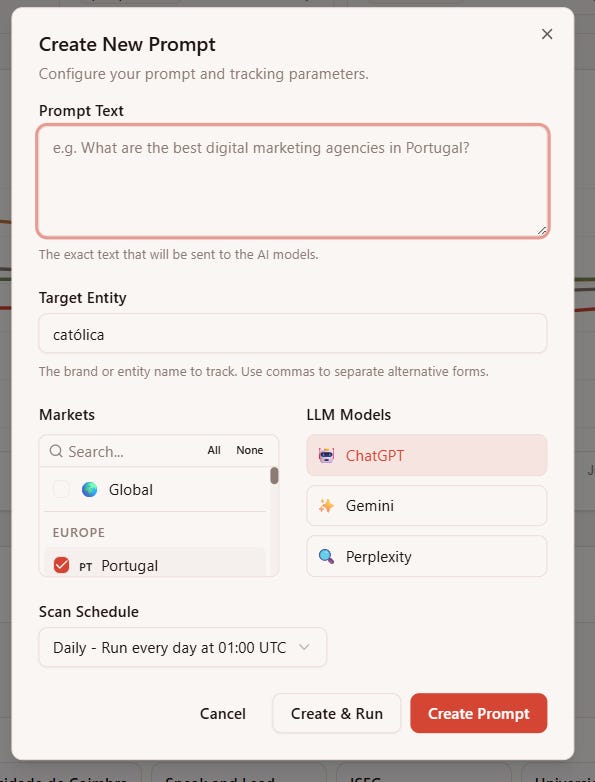
Step 1: Build Your Prompt Set
Start with the questions your buyers actually ask. Group them into three buckets:
Category prompts — "best [your category] tools", "top alternatives to [competitor]".
Branded prompts — "is [your brand] any good?", "what does [your brand] do?".
Problem prompts — the pain points your product solves, phrased the way a customer would say them.
Aim for 30–50 prompts to start. This set becomes the backbone of every check you run, so make it representative, not aspirational.
Step 2: Run the Prompts Across Every Major Model
Don't check just ChatGPT. Coverage differs wildly between platforms, and your blind spots are where competitors win. Run your set through ChatGPT, Gemini, Perplexity, Claude, and Google AI Overviews. Use a fresh or logged-out session where possible so personalization doesn't skew results, and run each prompt more than once — answers are probabilistic and vary between runs.
Step 3: Record What You See
For each prompt and model, capture whether you were mentioned, whether you were recommended, which competitors appeared, the sentiment, and any cited sources. A simple spreadsheet works for a first pass. The goal is a baseline you can compare against next month.
Step 4: Calculate Your Visibility Metrics
Turn raw observations into numbers you can track:
Visibility rate = prompts where you appeared ÷ total prompts.
Share of voice = your mentions ÷ (your mentions + competitor mentions).
Sentiment score = positive mentions ÷ total mentions.
These three numbers are your dashboard. Watch the trend, not the snapshot.
Step 5: Diagnose the Gaps
Where you're invisible, ask why. Common culprits: thin or unstructured content the model can't extract, no authoritative third-party sources confirming your claims, outdated information in the model's training data, or competitors who simply produce more citation-worthy content. Each gap maps to a fixable action.
The Fast Way: Automate the Check
Doing all of this by hand works once. It does not scale to weekly monitoring across five models and fifty prompts — that's hundreds of data points, and the manual version goes stale the moment you finish it. This is exactly the problem LLM Search Console was built to solve: it runs your prompt set across every major AI platform automatically, tracks mention rate, share of voice, sentiment, and citations over time, and alerts you when your visibility shifts. Instead of a screenshot from one Tuesday afternoon, you get a living measurement of how AI represents your brand.
If you want a starting point without committing to anything, run a free visibility audit first, see where you stand against competitors, and decide from there.
Common Mistakes When Checking AI Visibility
Checking once and calling it done. AI answers drift constantly; a single audit is a photo, not a movie.
Only testing branded prompts. Of course the model knows you when asked directly — the money is in category and problem prompts where buyers are undecided.
Ignoring citations. On citation-heavy engines like Perplexity, the sources feeding the answer are your real leverage point.
Forgetting competitors. Your visibility only matters relative to who you're up against. Track them in the same set.
Conclusion: Make Visibility a Habit, Not a Hunch

AI is now the front door to your brand for a fast-growing share of buyers, and most companies are walking past that door blind. Checking your brand visibility in AI — methodically, across every model, and on a repeating schedule — is how you stop guessing and start steering. Build your prompt set, baseline your numbers, fix the gaps, and re-measure. The brands that win the next few years are the ones treating AI brand visibility as a discipline, not an afterthought.
Want more playbooks like this — practical, no-fluff guides to winning visibility in AI search? Subscribe to the newsletter and get every new breakdown delivered straight to your inbox. Hit subscribe, and start showing up where your customers are actually looking.