

Why LLM Brand Visibility Is the New SEO Battleground
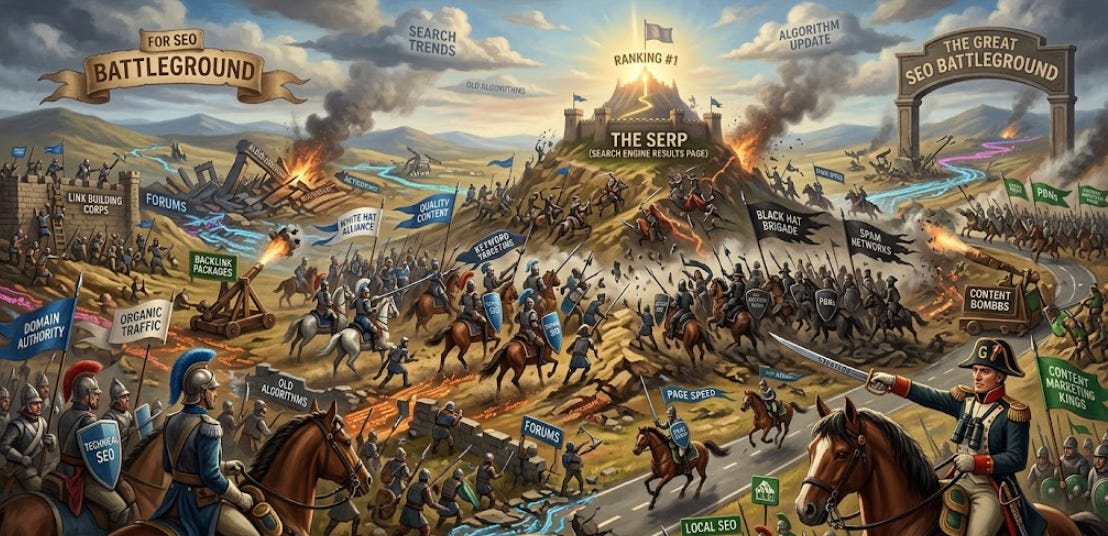
Something fundamental has shifted in how buyers research products. A year ago, a prospect would type a query into Google, scan the top results, and click through to your website. Today, millions of those same prospects are asking AI assistants for direct recommendations — and those AI assistants are answering with brand names, not blue links.
If your brand isn't one of the names being mentioned, you're invisible at the moment of highest intent.
LLM visibility is no longer a nice-to-have experiment for early adopters. It's becoming the primary discovery channel for B2B buyers, high-consideration consumer purchases, and any product where trust matters. The brands that figure this out in 2026 will own the category for years. The ones that wait will spend that same time trying to catch up.
This guide gives you a concrete, actionable playbook for how to increase brand visibility on LLMs — built on what actually works, not theory.
How LLMs Decide Which Brands to Mention

Before you can increase your visibility, you need to understand what drives it. Large language models don't have a search index you can "rank" in. Instead, they synthesize answers from the data they were trained on and, in some cases, from real-time retrieval. Brand mentions in AI answers are a function of three things:
1. Training Data Presence
If your brand appears frequently and positively across high-quality sources — editorial coverage, industry publications, forums like Reddit, authoritative review sites, academic citations — LLMs are more likely to have internalized your brand as a relevant answer to category queries. This is the long game, but it's the foundation of everything else.
2. Entity Authority and Verifiability
LLMs favor brands that have strong, consistent entity signals. This means your brand name, description, what you do, and who you serve should be stated clearly and consistently across your website, your Wikipedia entry (if applicable), your structured data markup, and your press mentions. AI models are essentially doing entity resolution — the clearer your entity is, the more confidently they cite you.
3. Retrieval-Augmented Generation (RAG) Sources
Newer AI search engines like Perplexity and Google AI Overviews don't rely solely on training data. They retrieve live web content at query time. This means your content needs to be structured for extraction: clear answers to specific questions, strong E-E-A-T signals, fast-loading pages, and content that directly addresses the queries your buyers are asking.
The 6-Step Framework to Increase Brand Visibility on LLMs

Step 1: Audit Your Current LLM Visibility
You can't improve what you don't measure. Start by running a systematic set of prompts across the major LLMs — ChatGPT, Perplexity, Gemini, Claude, and Grok — and tracking where your brand appears, in what context, and what's being said.
Key prompt categories to test:
Category queries: "What are the best [your category] tools?" / "Who are the top providers of [your service]?"
Comparison queries: "Compare [your brand] vs [competitor]"
Problem-solution queries: "How do I solve [problem your product solves]?"
Recommendation queries: "What [tool/platform/service] would you recommend for [use case]?"
Tools like LLM Brand Visibility tracking platforms can automate this across hundreds of prompts and give you a visibility rate — the percentage of relevant queries where your brand is mentioned. This is your baseline.
Step 2: Build a Content Corpus That LLMs Can Extract From
The single highest-leverage activity for increasing LLM visibility is creating content that directly answers the questions your buyers ask. Not content optimized for keywords in the traditional sense — content optimized for extractability.
What makes content extractable for AI answers:
Direct, confident answers early: Put the key answer in the first paragraph. Don't bury the lede.
Structured formats: Numbered lists, comparison tables, definition blocks, and FAQ sections are all highly extractable.
Specificity over generality: "Our platform reduces AI visibility reporting time by 70%" is extractable. "We help companies grow" is not.
First-person authority: Content written from genuine expertise, with original data, case studies, or proprietary frameworks, signals authority to both AI and human readers.
Build a comprehensive content map that covers every question in your buyer's journey at every stage. This is also what powers your SEO — the two strategies are more aligned than ever.
Step 3: Earn Coverage on the Sources LLMs Trust
Training data is weighted toward high-authority, high-trust sources. A mention in TechCrunch, Forbes, or an industry-specific publication carries far more weight than a mention on a low-authority blog. The same principle applies to community discussions: a thread on a relevant subreddit where your brand is recommended is valuable LLM training signal.
PR and digital authority strategies for LLM visibility:
Pitch original data studies to journalists — data-driven stories get cited and republished widely
Contribute expert commentary to industry round-ups and "best of" lists
Get reviewed on platforms like G2, Capterra, and Product Hunt — these are heavily represented in LLM training data
Build a presence in relevant communities (Reddit, Slack groups, LinkedIn) where authentic recommendations happen
Pursue podcast appearances — transcripts from high-authority podcasts are increasingly part of LLM training corpora
Step 4: Optimize Your Technical Foundation for AI Crawlability
If your website is hard for AI systems to read and extract from, you're leaving visibility on the table regardless of how good your content is. Technical optimizations that matter specifically for LLM and AI search visibility:
Schema markup: Implement Organization, Product, FAQ, and HowTo schema on relevant pages. Structured data makes your content significantly more parseable.
Clear entity definition: Your homepage and About page should unambiguously state what your brand does, for whom, and what makes it different — in plain language.
Fast, accessible pages: Perplexity and AI Overviews crawl live pages. Slow pages get skipped.
Consistent NAP data: For local brands, consistency across directories directly impacts entity confidence.
llms.txt: This emerging standard lets you provide AI systems with a curated summary of your brand's key information. Early adopters are gaining an edge.
Step 5: Monitor Competitor Visibility and Find the Gaps
LLM brand visibility isn't just about appearing more — it's about appearing more than your competitors in the moments that matter. Run the same audit you did for your brand on your top three to five competitors. Look for:
Queries where competitors are mentioned and you aren't
Queries where your brand appears but with weaker positioning or less favorable context
Emerging topics in your space where no brand has established clear authority yet
Gaps in competitor coverage are your biggest opportunity. Create content that fills those gaps with your brand's perspective and expertise, and you can capture mindshare before the category solidifies.
Step 6: Track, Iterate, and Compound
LLM visibility isn't a one-time optimization — it's an ongoing measurement and improvement cycle. Models update, new AI platforms emerge (SearchGPT, Google AI Mode, Microsoft Copilot), and buyer query patterns evolve. Your measurement cadence should match the pace of change.
What to track on a weekly or monthly basis:
Brand mention rate across your key prompt set and target LLMs
Share of voice vs competitors in category queries
Sentiment in AI responses — are the mentions positive, neutral, or negative?
Citation sources — which content assets are being cited to support mentions of your brand?
New LLM platforms and AI surfaces where your buyers are spending time
Platforms purpose-built for LLM brand visibility tracking automate much of this work, giving your team a dashboard analogous to Google Search Console — but for the AI search era.
Common Mistakes That Hurt Your LLM Visibility
As you execute this playbook, watch out for the errors that most commonly undermine results:
Publishing thin content at scale: AI-generated content that doesn't add genuine insight is less likely to be cited by other AI systems. Quality beats quantity for LLM training signal.
Ignoring brand consistency: If your brand is described differently across your website, your LinkedIn, your press kit, and your product pages, LLMs struggle to form a coherent entity model of you. Audit and align.
Only optimizing for ChatGPT: ChatGPT is the largest platform, but Perplexity drives significant research traffic, Gemini dominates mobile, and Claude is the preferred tool of many technical and enterprise buyers. Each has different weighting factors. Optimize for all.
Neglecting community and earned media: Brands that try to win LLM visibility purely through their own content miss the trust signals that come from third-party mentions. Earn coverage; don't just create content.
No baseline measurement: Without tracking your starting point, you can't tell if your efforts are working. Set up measurement before you execute.
The Compounding Advantage of Starting Now
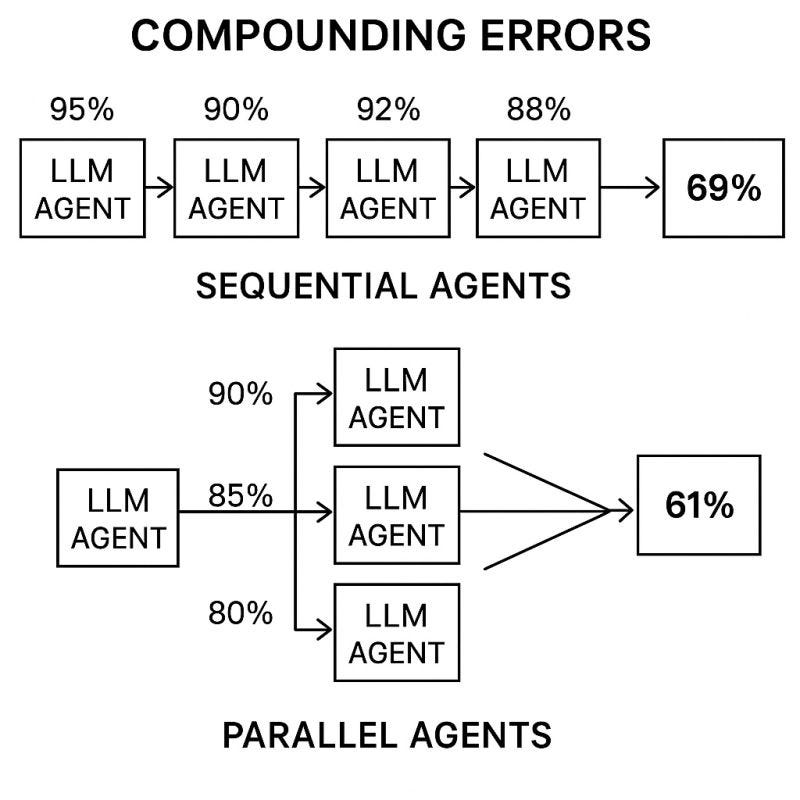
Here's the critical insight most marketing teams miss: LLM visibility is path-dependent. The brands that establish strong entity signals, earn third-party citations, and build extractable content libraries in 2025 and 2026 will be structurally advantaged as AI search matures. LLMs trained on today's web will carry the impressions formed now forward into future model versions.
The window for early mover advantage is open — but not indefinitely. In competitive categories, a handful of brands will establish dominant LLM visibility, and dislodging them will require the kind of sustained effort it takes to unseat an entrenched SEO leader.
The brands moving now are building a moat. The ones waiting are narrowing their options.
Start Measuring Your LLM Visibility Today
Every week without measurement is a week of flying blind in the fastest-changing channel in marketing. The first step — understanding where you stand — takes less than an hour if you have the right tools.
If you want to stay ahead of how AI search is reshaping brand discovery, subscribe to the LLM Search Console newsletter. We publish weekly breakdowns of what's working in LLM visibility, platform updates that matter, and case studies from brands actively winning in AI search.
Subscribe below and get the insights that help you show up when your buyers ask AI who to trust.