

Your next customer probably won't Google you. They'll ask ChatGPT. And when they do, one of two things happens: your brand gets named, recommended, and linked — or it doesn't, and you never even know you lost the deal. That blind spot is the single biggest gap in modern marketing measurement, and closing it starts with learning to track brand mentions in ChatGPT systematically.
Why Tracking ChatGPT Mentions Matters Now

ChatGPT has crossed from novelty into default research tool. Buyers use it to shortlist vendors, compare products, and validate decisions before they ever touch your website. Unlike Google, there's no rankings report, no Search Console, and no obvious place to see whether you showed up. The result is a measurement vacuum: marketing teams are flying blind on the exact surface where high-intent buyers now make decisions. Three shifts make this urgent right now:
Discovery moved upstream. People ask the model "what's the best tool for X" instead of clicking ten blue links. If you're not in the answer, you're not in the consideration set.
Answers are personalized and invisible. Two users asking the same question get different responses. You can't eyeball your visibility the way you'd check a keyword ranking.
Mentions compound. The more consistently you appear in AI answers, the more the model treats you as an authoritative entity — and the harder it is for competitors to dislodge you. Early movers build a durable moat in LLM brand visibility.
What "A Brand Mention" Actually Means in ChatGPT
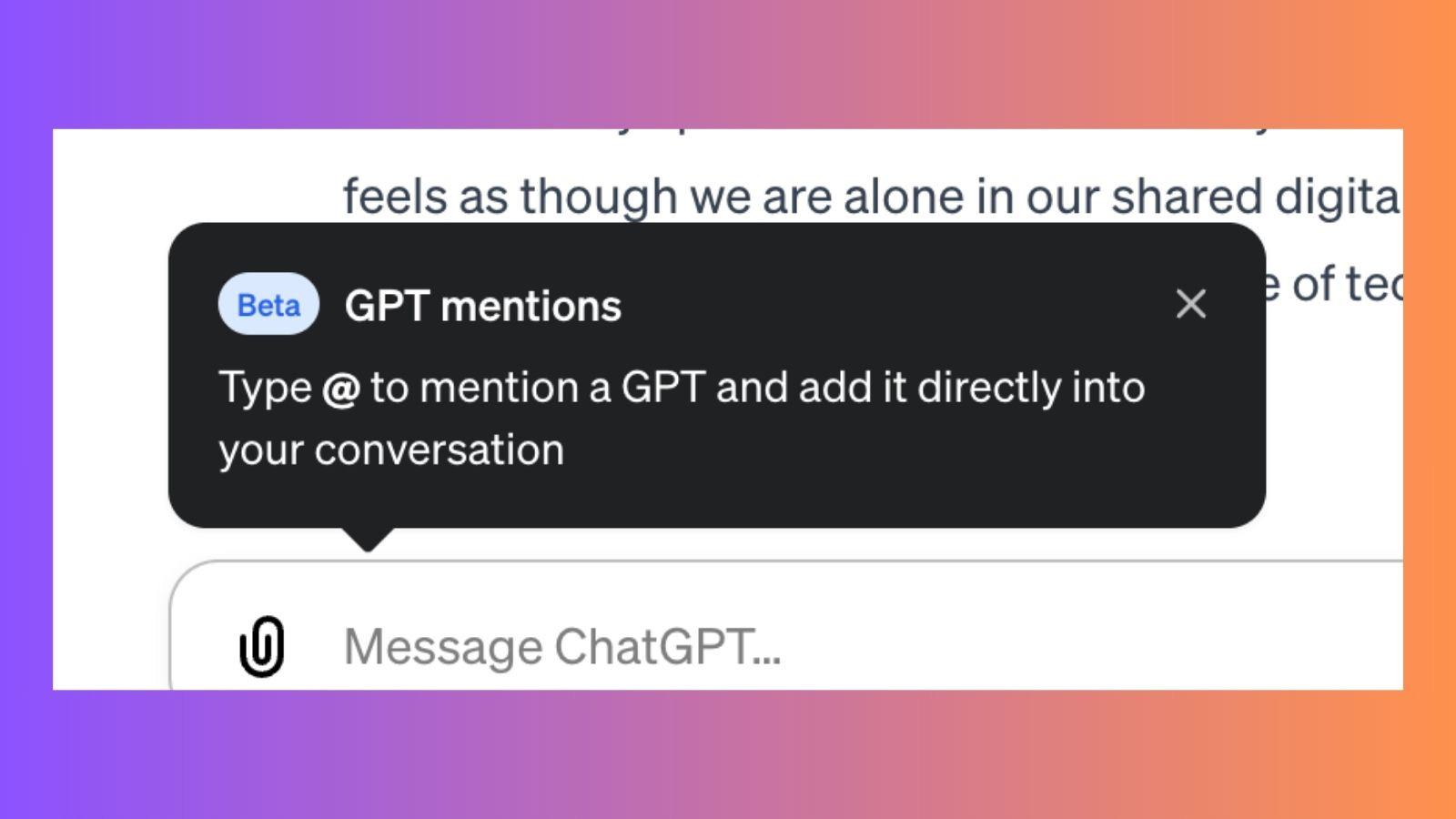
Before you track anything, define what you're measuring. A ChatGPT brand mention isn't a single thing — it's a spectrum, and each level carries different value.
Named mention: The model says your brand name in response to a relevant prompt.
Recommendation: The model actively suggests you as a solution, not just lists you.
Citation: The model links to your domain as a source (common in ChatGPT Search and browsing modes).
Sentiment: How you're described — "reliable and affordable" versus "expensive and dated."
Share of voice: How often you appear relative to competitors for the same set of prompts.
Tracking only "did my name appear" is the rookie mistake. The real signal lives in the combination: how often, how favorably, and how you stack up against rivals.
A Practical Framework to Track Brand Mentions in ChatGPT
You don't need a data-science team to start. You need a repeatable process. Here's a framework that scales from a spreadsheet to a full LLM visibility platform.
Step 1: Build Your Prompt Set
Your visibility is only as meaningful as the questions you test. Assemble 30–100 prompts that mirror how real buyers talk, grouped into:
Category prompts: "best [your category] tools," "top alternatives to [competitor]."
Problem prompts: "how do I solve [pain point your product fixes]."
Branded prompts: "is [your brand] any good," "[your brand] vs [competitor]."
Comparison prompts: "[competitor A] vs [competitor B]" — where you want to be inserted into the answer.
Step 2: Run Prompts on a Schedule
A one-time check is a snapshot; visibility is a trend. Run your prompt set on a fixed cadence — weekly at minimum — and log the full response each time. ChatGPT's answers drift as the model updates and as the web changes, so consistency in timing is what makes your data comparable.
Step 3: Score Every Response
For each prompt, capture whether you were mentioned, in what position, with what sentiment, and which competitors appeared alongside you. Convert this into a simple visibility rate (percentage of prompts where you appear) and a share-of-voice figure (your mentions versus the competitive set).
Step 4: Diagnose and Act
A low visibility rate is a content and authority problem, not a mystery. Look at what sources ChatGPT does cite for your category, then earn presence there: strengthen your owned content, get mentioned in the third-party roundups the model trusts, and tighten the entity signals that tell AI systems who you are and what you do.
Manual Tracking vs. Purpose-Built Tools
You can start manually — open ChatGPT, run your prompts, log results in a sheet. It's free and it builds intuition. But it breaks down fast:
It doesn't scale. Running 50 prompts weekly by hand, across multiple models, is hours of tedious work.
It's not reproducible. Your personal ChatGPT history and memory skew your results versus a clean session.
It misses competitors. Real insight comes from benchmarking share of voice, which multiplies the manual workload.
A purpose-built LLM brand visibility tool automates the prompt runs, strips personalization bias, tracks sentiment and citations, and benchmarks you against competitors over time — turning a manual chore into a live dashboard. That's exactly the gap a dedicated AI visibility tracking platform is built to close.
Make AI Visibility a Measured Channel
ChatGPT is now a primary discovery surface, and the brands that win are the ones treating it like any other measurable channel — with a prompt set, a cadence, a scorecard, and a plan to improve. Tracking brand mentions in ChatGPT isn't a vanity exercise; it's how you protect your place in the buyer's shortlist before a competitor takes it. Start measuring now, while most of your market still isn't looking.
If you want the frameworks, benchmarks, and tactics to win AI search delivered straight to your inbox, subscribe to the LLM Search Console newsletter on Substack — and start turning AI visibility from a blind spot into your sharpest competitive edge.