
Most GEO advice still assumes a single model reads your page top to bottom, weighs the prose, and decides whether you're trustworthy. That mental model is wrong on three fronts at once — and the gap between those wrong assumptions and how production AI search actually works is exactly where brands disappear from answers.
Here are three intersections that rarely get discussed together, even though they compound into one outcome: whether your brand gets cited at all.
1. MCP Turned Retrieval Into a Function Call, Not a Page Visit
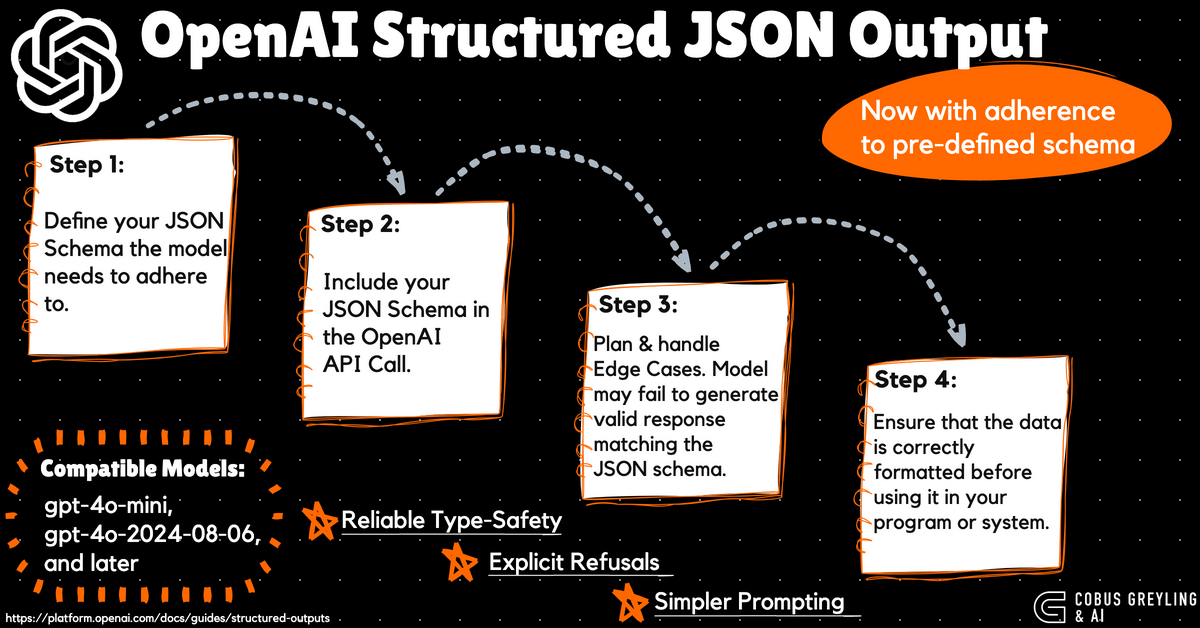
Model Context Protocol (MCP) standardizes how an LLM agent calls external tools: a typed schema goes in, structured JSON comes back. No rendering, no scraping, no "reading" in the human sense.
This matters because an increasing share of "search" traffic from agents isn't a crawler hitting your HTML — it's a tool call hitting a database, an API, or an MCP server that someone else built on top of your data (or a competitor's). If your product information, pricing, or docs exist only as marketing copy on a webpage with no structured equivalent — no schema.org markup, no API, no llms.txt, no MCP server — you are architecturally invisible to that retrieval path, regardless of how well-written the page is.
The practical shift: "is this page indexable" is being replaced by "is this fact retrievable as a discrete, typed object."
2. Quantized Inference Doesn't "Read" Nuance — It Pattern-Matches Faster

The model answering a user's query in production is almost never the full-precision research checkpoint. It's an INT8 or INT4 quantized version, served that way because latency and cost at scale demand it. Quantization is a deliberate trade: you give up some fine-grained discrimination ability in exchange for throughput.
What gets lost first in that trade is exactly the kind of subtle, paragraph-six argumentation that differentiates "good writing" from "great writing" to a human reader. What survives best are high-signal structural cues: consistent entity naming, repeated brand-to-claim pairings, headers that state the answer, tables, and explicit comparisons.
The uncomfortable implication: the model forming the answer that determines your visibility is, by design, a less nuanced reader than the one you imagine when you write. It rewards structure over subtlety because structure is cheaper to extract correctly at low precision.
3. Zero-Click Is the Median Outcome, Not the Edge Case
A zero-click result is one where the engine answers directly and the user never visits a source. This is no longer a fringe behavior reserved for weather and unit conversions — it's the default mode for "what is," "how does," and "compare X vs Y" queries across ChatGPT, Perplexity, and AI Overviews.
What this means for content: the unit of competition isn't the article anymore, it's the extractable fragment — a single sentence, definition, stat, or table row that a RAG pipeline can chunk, retrieve, and quote. If your strongest claim about your product is buried in paragraph six of a narrative blog post, the chunking step may never surface it as the cited fragment, even if the page itself gets retrieved.
4. The Hidden Stack: How These Three Compound
Stacked together, these three layers form a filter your brand has to pass through sequentially:
MCP / structured access determines whether your data is reachable by an agent at all. Quantized inference determines how that reachable data gets weighted and selected once retrieved. Zero-click extraction determines which exact fragment — if any — survives into the final answer, with your brand name attached.
A brand can rank #1 in traditional search and still score zero across this stack: unreachable via structured access, deprioritized by a compressed model that can't parse its nuance, and never extracted as a clean fragment. None of that shows up in Google Search Console. All of it shows up — or doesn't — in what ChatGPT says when someone asks about your category.
Quick Wins for GEO
A few concrete, low-effort changes that align with all three layers above:
Publish discrete Q&A blocks. One claim per block, brand name and answer in the same sentence, near the top — this is the unit quantized models extract cleanly and the unit zero-click surfaces.
Add structured data your product info. Schema.org markup, a JSON feed, or an llms.txt file gives agents a non-HTML path to your facts — this is your MCP-era visibility floor.
Use comparison tables for "X vs Y" and "best X for Y" queries. Tables survive chunking and quantized extraction far better than prose paragraphs.
Repeat your brand-to-claim pairing verbatim across pages. Compressed models lean on repetition as a confidence signal — inconsistent phrasing of your own value prop works against you.
Stop guessing — measure what's actually being cited. Tools like LLM Search Console track how ChatGPT, Claude, Gemini, and Perplexity actually describe your brand and competitors, so you can see which fragments are winning and which ones never make it past the first layer of this stack.