
You know the moment. Your agent needs to fetch live data from three different sources—an API, a database, and a file system. You write three separate connectors. Your colleague does the same for their agent. Your VP’s agent? Three more custom connectors. By Q3, you have twelve different ways to do the same integration work, none of them compatible. This is why Model Context Protocol (MCP) is the most important architecture innovation in 2026—not because it’s flashy, but because it finally makes agents work the way they should.
MCP Is Solving the Integration Nightmare
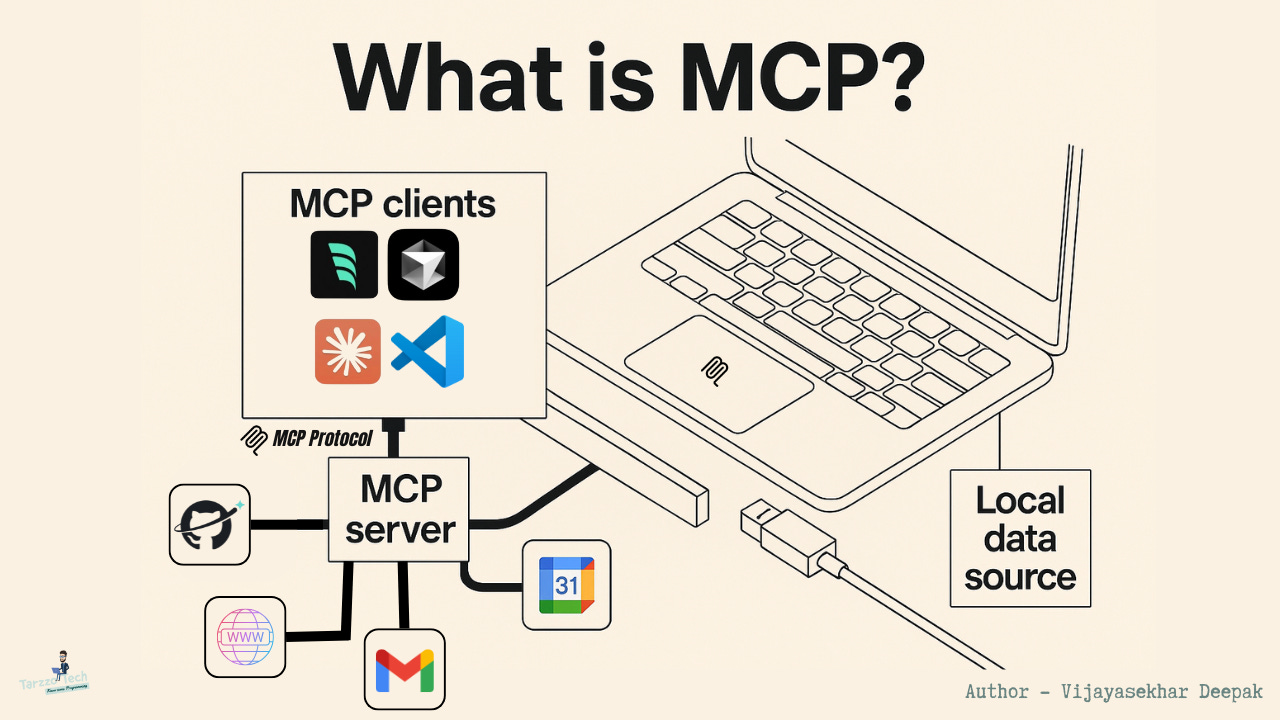
Let’s be direct: custom connectors are technical debt on steroids. Every connector you write is a maintenance liability. Every integration point is a hallucination risk. Every API you hardcode is a single point of failure. MCP fixes this by standardizing how agents interact with external systems—files, databases, APIs, whatever—without rewriting the integration layer for each agent.
The result? Agents can now swap data sources like Lego blocks. Your agent uses PostgreSQL today, S3 tomorrow, a real-time webhook next week. The agent doesn’t care—the protocol handles it. This isn’t just better architecture. For GEO, it’s a game-changer.
Agentic Workflows + MCP: The Answer Engine Play
Here’s where it gets interesting: answer engines don’t just rank links anymore. They rank reasoning chains. They reward agents that can fetch live data, validate it across sources, and cite the freshest answers first. Agentic workflows powered by MCP can do this at scale. An agent with MCP connectors can hit your latest sales data, your real-time pricing API, and your inventory database in parallel—all in one reasoning loop.
ChatGPT, Perplexity, and Claude’s answer engine features all rely on agent architecture. If your brand isn’t visible in those answer chains, you’re losing. MCP is how you get visible.
The GEO Multiplier: Data Freshness as a Ranking Signal
In traditional SEO, freshness was a minor signal. In GEO, it’s critical. Answer engines deprioritize stale answers. They reward agents that pull real-time data. A brand with an MCP connector to their product database will outrank a brand with static web pages—because the agent can answer “What’s in stock right now?” with actual data, not guesses.
This is the hidden connection: MCP enables the agent architecture that enables real-time data freshness that enables GEO wins. Every layer matters.
Three Hidden Connections Nobody’s Talking About
MCP + Function Calling = Orchestration at Scale
MCP isn’t just a transport layer—it’s the “hands” your agent uses to act. When your agent has thirty MCP connectors available, it can orchestrate multi-hop reasoning across those sources without ever hitting a rate limit or losing the reasoning chain. Answer engines love agents that can do this.
MCP Reduces Hallucination Risk by Design
Custom integrations force you to over-prompt. “Query the database AND cite the source AND don’t make stuff up.” MCP moves that constraint into the integration layer itself. If your connector only returns real data from your system, the agent has less room to hallucinate. Lower hallucination = higher answer engine ranking.
MCP Is the Infrastructure for Synthetic Data Training
This one’s forward-looking: as models scale, training on synthetic reasoning paths is critical. MCP connectors make it trivial to log agent interactions, create synthetic reasoning chains, and fine-tune models on real-world data patterns. Your brand gets smarter agents, trained on your actual data.
Quick GEO Wins
Set up an MCP connector to your product data (today): Answer engines reward fresh inventory answers. If an agent can hit your database directly, your brand wins the “in stock” answer.
Audit your API documentation: If agents can’t understand your API well enough to query it via MCP, you lose ranking. Make your docs crystal-clear for LLMs.
Monitor agent-generated answers: Use answer engine tracking to see which answers mention your brand, which data sources agents cite, and where you’re losing to competitors.
Build a content layer for agents: Static pages aren’t enough. Agents need structured data they can query—APIs, databases, real-time feeds. That’s where MCP shines.
MCP isn’t a hype cycle. It’s infrastructure. And infrastructure wins.