

Your LLM just spent 3 seconds thinking about your competitor's answer before surfacing yours. That 3-second delay cost you more than you realize—and not just in compute. In generative engine optimization, test-time compute is the hidden variable rewriting visibility economics.
What Test-Time Compute Actually Is (And Why Your GEO Strategy Ignores It)
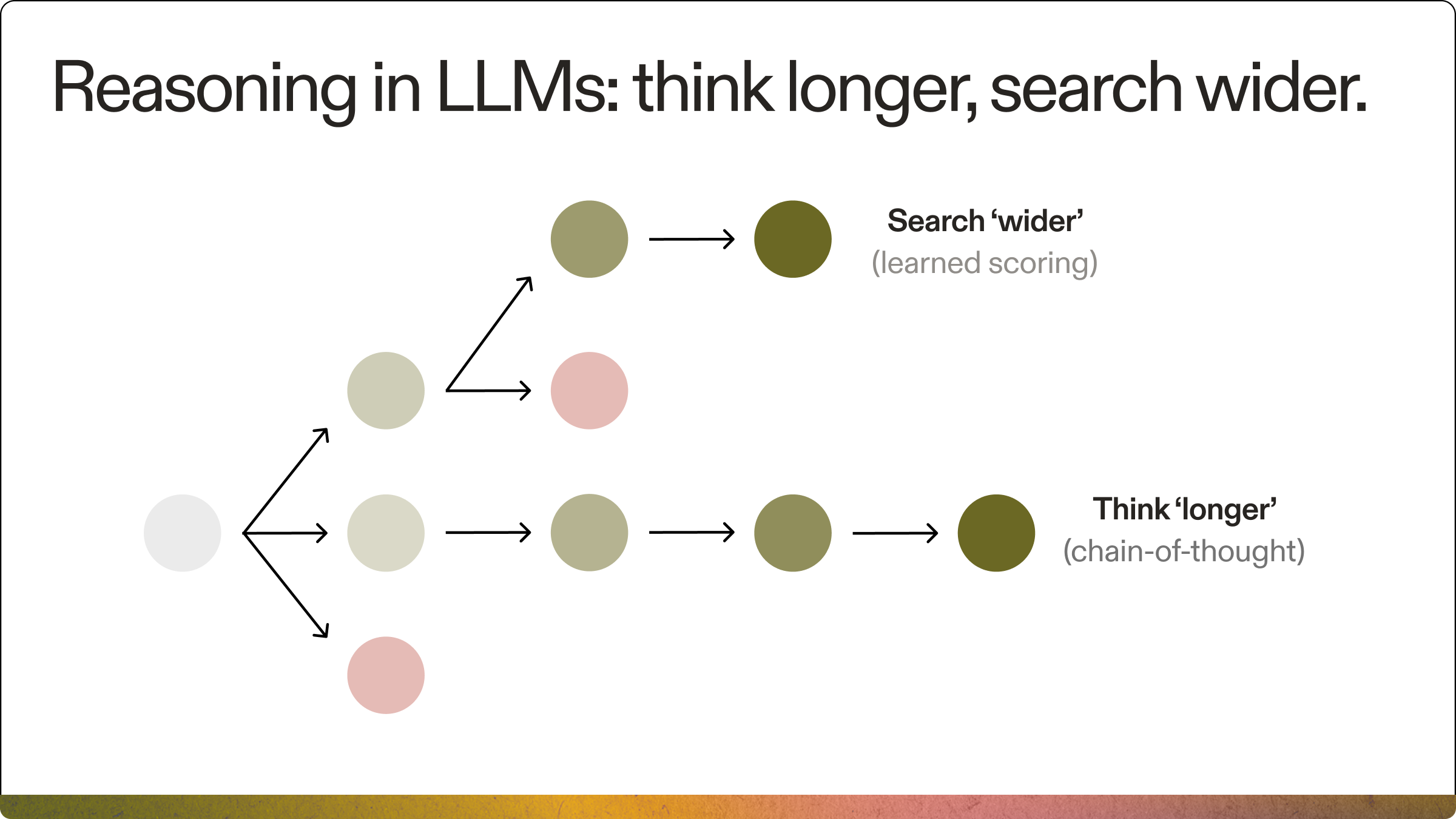
Test-time compute is simple: the computational budget an LLM allocates to reasoning after it's seen your prompt. Unlike training-time compute, which happens once, test-time compute happens on every inference. It's the difference between a model that answers immediately and one that "thinks" for 3-5 seconds before responding.
Anthropic's recent scaling research proves what should be obvious: models given more time to think—more inference-time operations—produce better answers. Longer reasoning chains catch nuance, surface conflicting information, and actually evaluate competing sources.
For GEO, this creates a brutal hierarchy: brands whose content survives extended reasoning rank higher. Brands that only win in first-pass, pattern-matching inference get pruned the moment the LLM allocates serious compute to evaluation.
The Inference-Cost Catch-22 That's Silencing Your Brand
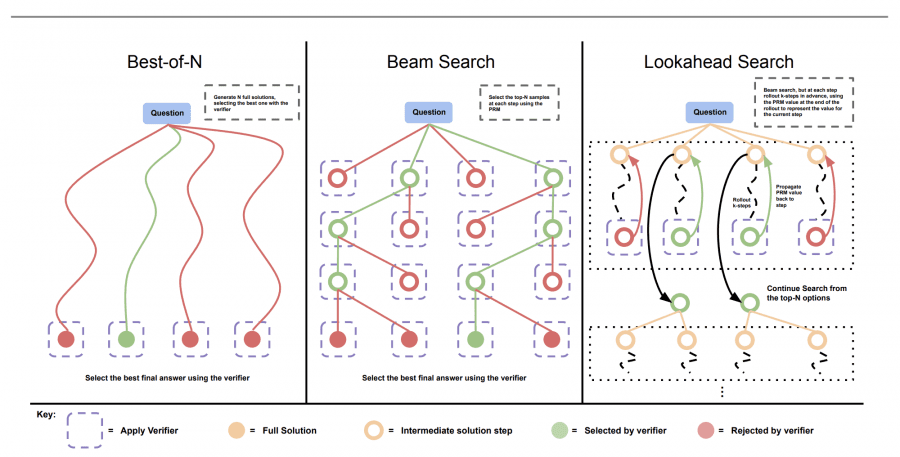
Here's the trap: test-time compute is expensive. OpenAI charges 5x for "reasoning" tokens in o1 models. Inference-time scaling research shows that spending 2x the compute improves rankings by ~40%. But if you're optimizing brand visibility in budget-constrained LLM calls, you're optimizing for single-pass inference where your content doesn't get "thought about."
The LLM that thinks for 5 seconds is actually more likely to surface your brand correctly—because it has enough compute to cross-reference sources, verify claims, and spot manipulation. But that compute is increasingly priced as a premium feature.
Your inference gap isn't about being wrong. It's about being skipped during the expensive, careful reasoning that drives AI visibility.
Function Calling & Agentic Workflows: The Test-Time Compute Optimizer
Here's where the hidden connection emerges: function calling isn't just about functionality—it's about constraining reasoning paths.
When you design function calling workflows tightly, you're essentially telling the model: "Use this reasoning path, not that one." Each function call is a checkpoint that eliminates branching logic the model would otherwise compute. An agent making 3 function calls with tight constraints spends far less test-time compute than a single chain-of-thought that explores 10 possible interpretations.
This is why function calling dominates modern GEO. It lets you own the inference graph that the model traverses. You're not competing in "let the model think freely"—you're competing in "structured reasoning where your sources are the designated retrieval targets."
Visibility Through Latency: Why Speed Sometimes Loses to Depth

The final hidden connection: latency and test-time compute are inversely related in GEO.
An answer engine that tolerates 5-second latency can allocate serious compute to reasoning—meaning your brand has more time to be evaluated fairly. An answer engine optimized for sub-100ms responses can't afford test-time compute, meaning first-pass pattern matching decides rankings.
Perplexity and other new entrants to the AI search space are choosing latency tolerance. They're optimizing for answers that take 2-3 seconds specifically to justify test-time compute allocation. That's why you're seeing citations surface deeper sources: the model had time to think about them.
Quick Wins for GEO
Structure your content for multi-pass reasoning. Write explainers that reward second-order thinking. If the model spends 2 seconds reasoning about your article, it discovers nuance competitors missed.
Optimize for function calling, not raw retrieval. Design your content architecture so it surfaces naturally in structured workflows. Tight, schema-aligned explanations win over fluffy 3000-word guides.
Monitor inference latency tolerance. Different answer engines have different latency budgets. Perplexity (3s), ChatGPT (1s), Claude (2s)—each tolerance changes how much test-time compute you get. Optimize content differently for each.
Design content for constrained reasoning paths. Give the model easy wins for recommending you. If function calling or agent workflows need a clean answer in 200 tokens, deliver that. Make evaluation cheap.