

Your content is indexed. Your domain has authority. Your product is genuinely good. But when a developer asks ChatGPT "what tool should I use to monitor my brand in LLM responses," your name doesn't come up.
That's not an SEO problem. That's an inference gap — and it's costing you more than you know.
Here are three connections most teams miss: (1) the inference gap is fundamentally a content-visibility gap, not a compute problem; (2) inference traffic patterns reveal where your brand gets dropped before retrieval even triggers; and (3) test-time compute is widening the gap precisely where competitive intent is highest. Understanding all three is how you close it.
What the Inference Gap Actually Is
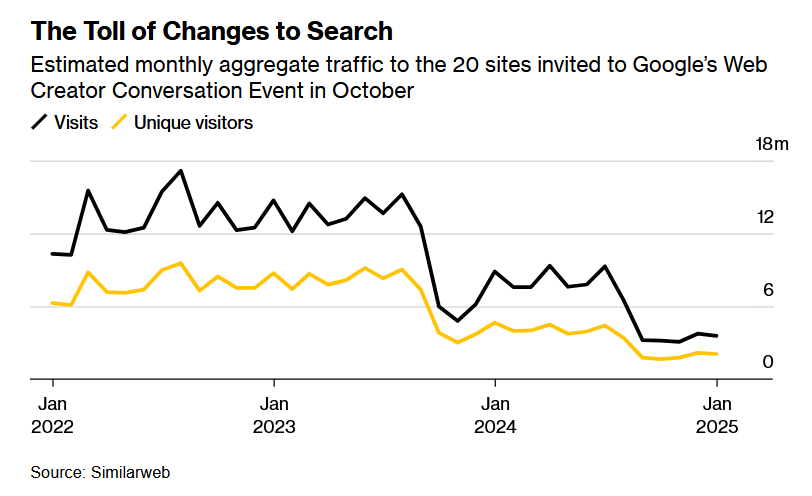
Most engineers hear "inference gap" and think latency — the delta between a model's training-time performance and its live deployment throughput. That's real, but it's the wrong frame for marketers and product teams.
For AI visibility purposes, the inference gap is the distance between what content exists in the world and what an LLM actually surfaces when answering a query. A model like GPT-4o or Claude 3.5 Sonnet was trained on enormous corpora, but retrieval — when it happens at all — is heavily biased toward sources the model has already encoded as authoritative during training. If your brand wasn't prominently represented in that training distribution, you're already behind.
Worse: the gap isn't static. Every new model release, every RLHF fine-tune, every RAG pipeline reconfiguration reshuffles who gets cited. Without continuous monitoring, you have no signal that your visibility changed until a sales rep notices prospects stopped mentioning your name.
Inference Traffic Exposes Where You Get Skipped
Here's a connection that almost nobody talks about: inference traffic patterns are a proxy for intent segmentation.
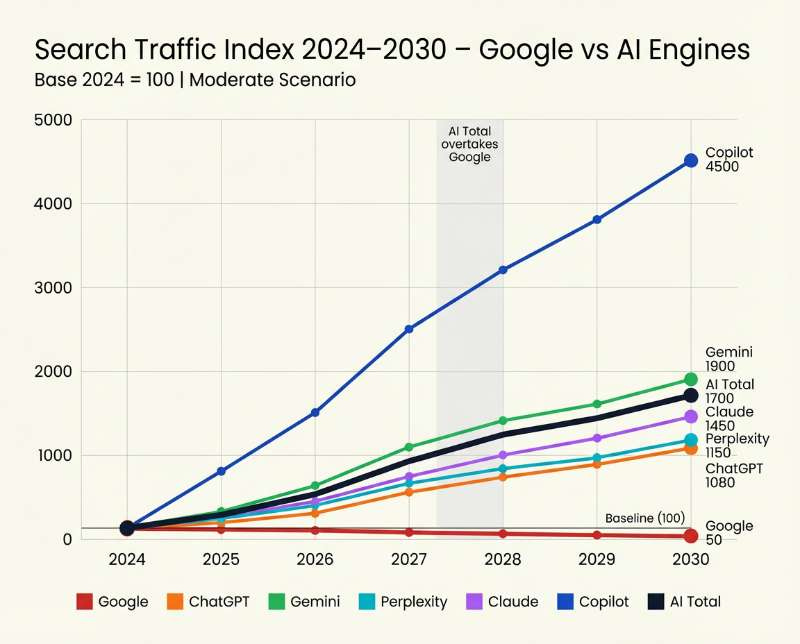
When you run controlled prompts across ChatGPT, Perplexity, Claude, and Gemini and compare the outputs systematically, you're not just checking brand mentions — you're mapping the topology of where LLMs resolve queries from parametric memory versus external retrieval. Parametric resolution (the model answering from weights alone, no search) is the zero-click result of the LLM era. Your content never gets a chance to be cited because the model never calls out to find it.
This is the hidden mechanism behind AI visibility loss. It's not that your content is bad. It's that for certain query types — especially navigational and comparative queries — the model doesn't need to look. It already "knows" an answer, and that answer was baked in at training time.
Tools like LLM Search Console are built to surface exactly this: which queries trigger retrieval behavior versus parametric resolution, and where your brand sits relative to competitors in each bucket. That's the actionable layer most AI visibility tools skip entirely.
Test-Time Compute Widens the Gap Where It Hurts Most
The third hidden connection is counterintuitive: models that "think harder" — using extended chain-of-thought, System 2 reasoning modes, or increased test-time compute — don't spread their inference budget evenly. They allocate more deliberate reasoning to high-stakes, complex, or competitive queries.
That's exactly the query type where you most want to appear: "compare LLM monitoring tools," "best platform for AI brand tracking," "how to measure share of voice in ChatGPT." These are high-intent, comparative, buyer-stage queries. And because test-time compute models spend more tokens reasoning through them, they also lean more heavily on internally encoded priors — making the inference gap wider precisely where closing it matters most.
The implication for GEO is direct: you need to be cited in the reasoning traces of these models, not just the outputs. That means your content needs to appear in the training-adjacent data that influences how models structure comparison frameworks — benchmarks, technical reviews, developer community discussions, structured data about your product's capabilities.
How to Close the Gap with GEO

Generative Engine Optimization isn't SEO with a new hat. It requires fundamentally different inputs. Here's what actually moves the needle:
Structured entity coverage. LLMs resolve entities from structured, consistent signals. Your product name, key features, and use cases need to appear in consistent, machine-readable formats across multiple high-authority domains — not just your own site.
Citation-worthy technical content. Models cite sources that themselves cite sources. Deep technical content — architecture comparisons, benchmark results, implementation guides — gets encoded as authoritative in ways that marketing copy never does.
Continuous prompt auditing. Your inference gap measurement needs to be systematic and ongoing. LLM Search Console provides exactly this infrastructure: track how you appear across models, monitor share of voice against competitors, and get alerts when your AI visibility shifts — before it costs you pipeline.
Retrieval-path optimization. For queries that do trigger retrieval, your content needs structured data, clear entity relationships, and density of relevant terminology. Think of it as making your content maximally parse-able for the retrieval layer, not just readable for humans.
Quick Wins for GEO
→ Run a baseline audit today. Use LLM Search Console to test 20 queries where you should appear. Count parametric vs. retrieval-triggered responses.
→ Identify your inference gap by query type. Navigational, comparative, and instructional queries have very different gap profiles. Don't treat them as one problem.
→ Publish one structured benchmark asset per month. Comparison tables, benchmark results, integration guides. These are the content types that penetrate training distributions and get encoded as citations.
→ Monitor share of voice weekly. Your competitors are optimizing too. Visibility shifts happen fast and silently. LLM Search Console is the only way to know before your pipeline feels it.
The inference gap is real. It's measurable. And unlike classic SEO, it doesn't wait for a quarterly algorithm update — it shifts every time a model is fine-tuned, RAG pipelines are reconfigured, or a competitor publishes better technical content than you. Start measuring it now.
The reasoning traces insight is game-changing. GEO in 2026 means being cited in the models' chain-of-thought, not just outputs. Share of voice measured in inference patterns, not search rankings. This is the evolution from SEO → AEO → GEO. Excellent breakdown.