

Before MCP, every new data source meant another custom Python connector. Before MCP, your agents couldn't reliably talk to your databases without hallucinating API calls. Before MCP, scaling from one agent to a swarm meant exponential integration debt. Welcome to 2026, where MCP just made all of that irrelevant.
The Model Context Protocol isn't flashy. It won't appear in your board deck. But it's the infrastructure layer that transforms agents from novelty toys into production workhorses.
MCP Is RAG's Missing Infrastructure Layer
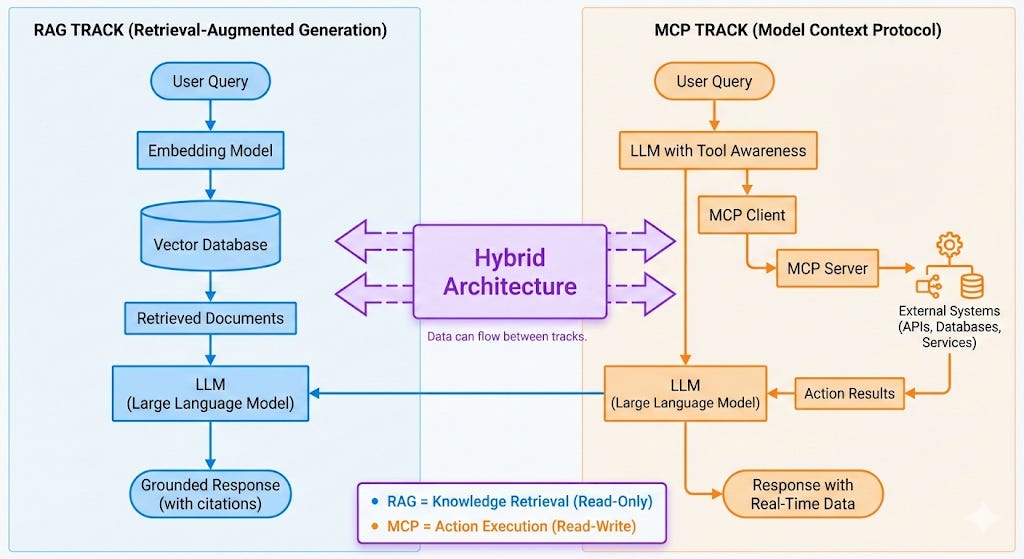
Everyone obsesses over vector embeddings and hybrid search. But RAG is fundamentally broken without standardized connectors. MCP solves this: it's the middleware that lets agents retrieve from Notion, PostgreSQL, S3, and your local filesystem with identical syntax.
The hidden win? Your hallucination rate drops dramatically when your agent knows it can reliably fetch from Bob's database instead of guessing. Grounding isn't just about confidence scores—it's about your agent having guaranteed access to the right data source, formatted consistently, at query time.
MCP + Multi-Agent Swarms = No More Integration Debt
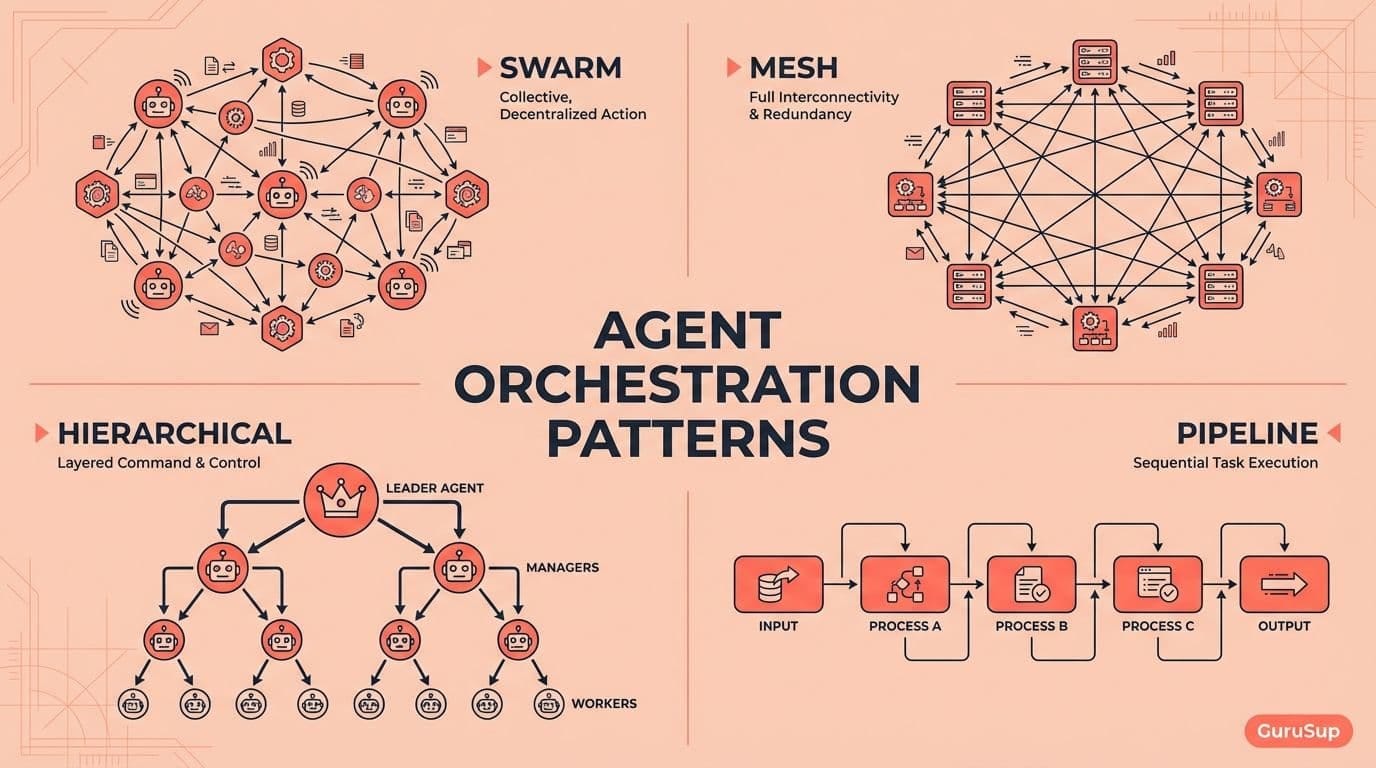
Single agents are cute. Swarms are the future. But coordinating a Researcher agent, a Coder agent, and a Critic agent across your entire tool ecosystem? That's a nightmare without MCP.
Before MCP: each agent gets its own custom connectors. You're writing integration code in triplicate. Before MCP: adding a new data source meant updating three different codebases.
After MCP: one standardized protocol. One set of connectors. Your swarm scales horizontally without the integration tax.
MCP as Token Efficiency Multiplier

Context windows are massive now (1M+ tokens are commodity). But here's what nobody talks about: wasteful APIs drain your efficiency budget faster than raw token count.
An agent with sloppy connectors makes 47 API calls to get the answer you need in 3. That's token waste. That's latency. That's hallucinations propagating through retry loops. MCP enforces structured, reliable connectors, meaning your agent makes fewer calls with higher precision. Token count becomes less relevant than token quality.
The Competitive Moat Isn't Your Model—It's Your Connectors
All top-tier models are converging in capability. Claude, ChatGPT, Gemini—they're all "good enough" now. Your competitive advantage isn't the model; it's how fast you can integrate your data and systems.
MCP inverts this. Instead of every startup rewriting integrations, the ecosystem converges on a single standard. This means faster deployment, fewer bugs, and better Agentic Workflows for everyone. Your moat shifts from "which model did we license" to "how comprehensively did we instrument our systems with MCP connectors."
Quick Wins for GEO
Content Discovery: Document your MCP-enabled tool integrations; agents retrieve your content faster and more reliably, boosting visibility in AI answers.
API Reliability: Ensure your public APIs have MCP server wrappers; when agents query your data, it arrives consistently formatted, improving context accuracy.
Answer Engine Optimization: MCP reduces hallucinated claims about your product; agents ground claims in real, verified data you've exposed via standardized connectors.