

Most brand teams chasing AI visibility are debugging the wrong layer. They tweak prompts, stuff more keywords into web copy, and wonder why ChatGPT still gets their product features wrong. The answer isn't in your content strategy. It's in the synthetic data pipeline that trained the model—and the knowledge distillation process that compressed that training into the model your customers are actually talking to.
Synthetic Data Now Dominates Pre-Training—And Your Brand Probably Isn't In It

The models answering your customers' questions weren't trained primarily on your website. They were trained on synthetic data at scale. OpenAI, Google DeepMind, and Mistral have all confirmed moves toward synthetic data generation as a core pre-training strategy—because real web crawl data is running out and synthetic data is cheaper to generate at quality.
Here's the problem: synthetic data pipelines don't faithfully reproduce niche brand facts. They reproduce patterns. If your brand doesn't have a strong, consistent factual footprint in the real-world corpus that feeds the synthetic generation pipeline, your brand facts get smoothed over, averaged out, or simply hallucinated into something that sounds plausible but isn't true.
Your hallucination rate isn't a retrieval problem. It's a representation problem in the data the model learned from before it ever saw your website.
Knowledge Distillation Compounds the Error at Inference Scale
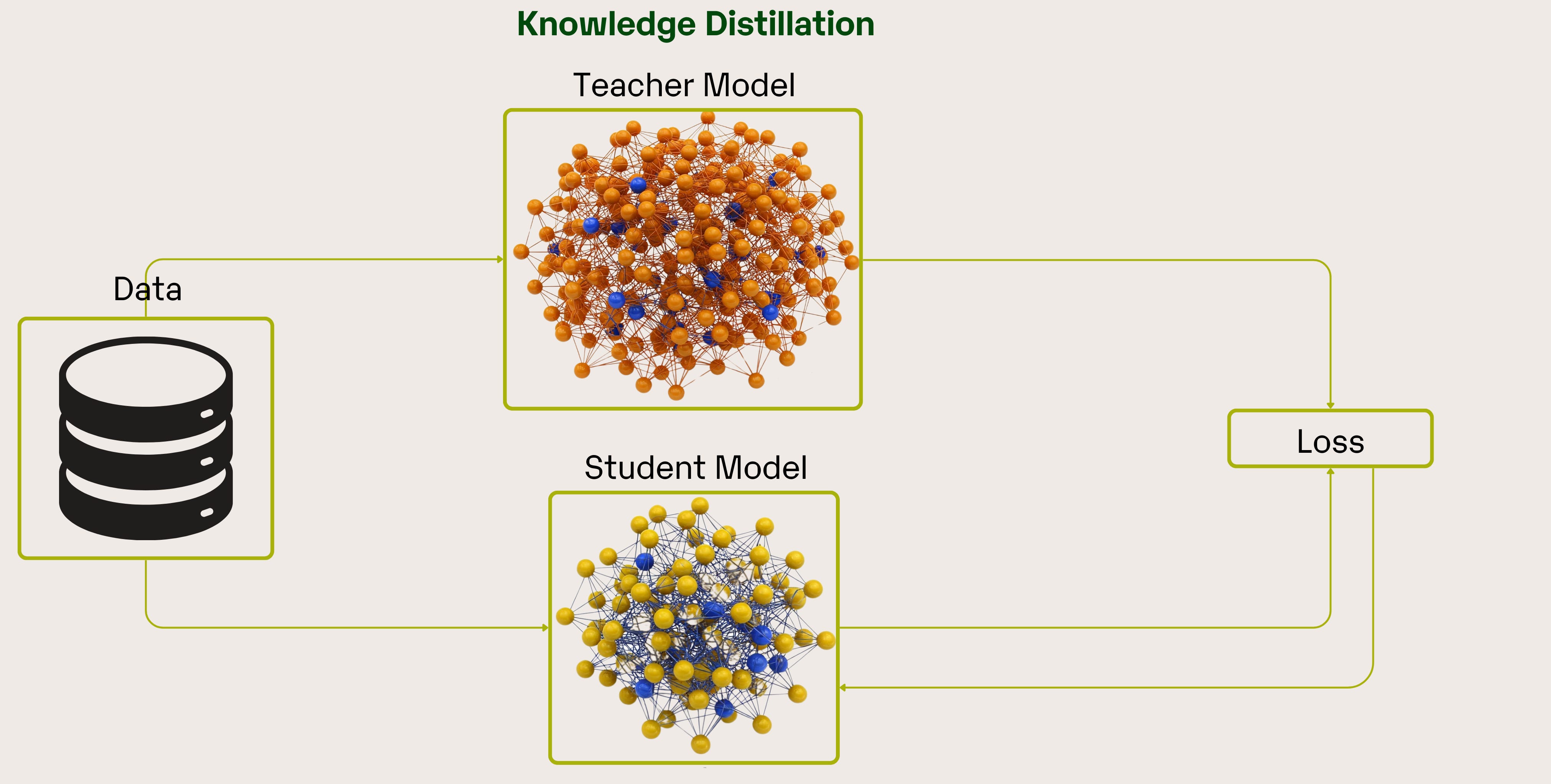
Even if a frontier model (GPT-4o, Claude 3.7, Gemini 1.5 Pro) has reasonably accurate brand facts, that's rarely the model serving most user queries. Most inference traffic runs through distilled, quantized, or fine-tuned derivatives—smaller models trained to replicate the behavior of larger ones.
Knowledge distillation works by having a "teacher" model generate training data for a "student" model. If the teacher has uncertain brand facts—low confidence, sparse grounding—that uncertainty distills downstream. The student model learns the teacher's hallucination patterns, not just its reasoning patterns.
This means your brand's hallucination rate isn't static across model versions. It compounds. Every time a new efficient inference model gets released via distillation from a prior model with weak brand representation, you start from a worse baseline. The gap widens faster than your content calendar can catch up.
The Brand Desert Effect in Vertical Fine-Tuning
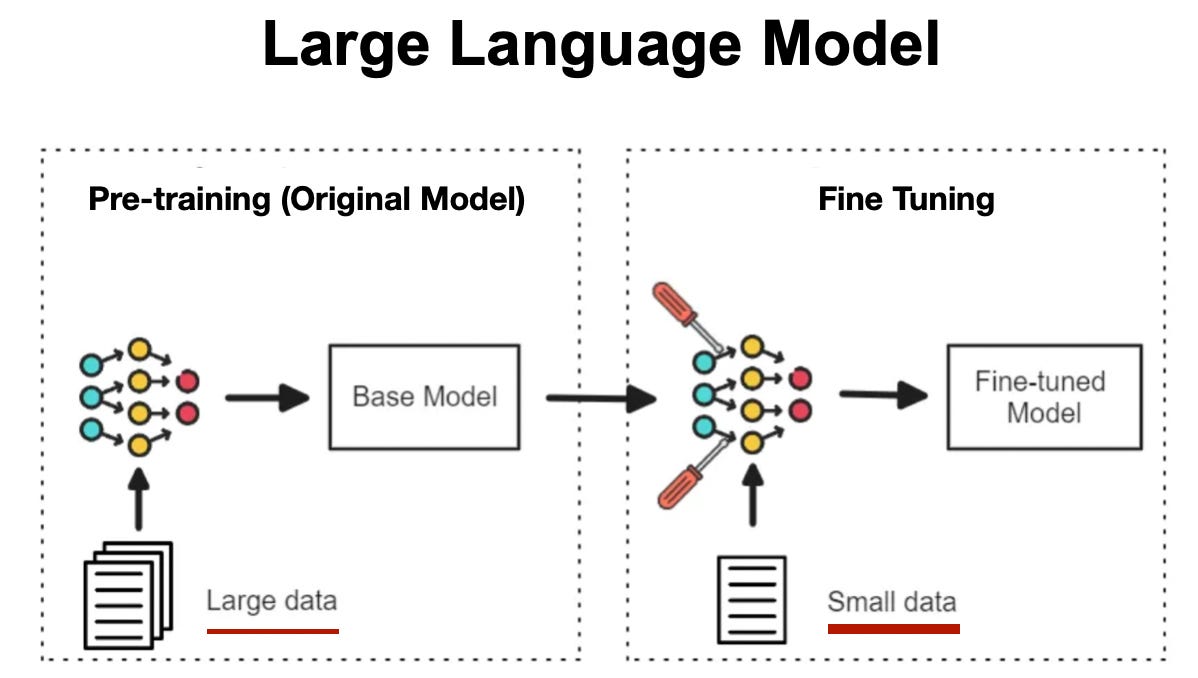
Here's the third hidden connection: when companies fine-tune base models on synthetic domain data—to build vertical AI, customer-facing assistants, or RAG-augmented tools—they inadvertently create what I call "brand deserts."
Fine-tuning on synthetic domain data reinforces the base model's existing knowledge while weakening its confidence on facts that weren't in the synthetic fine-tuning set. If your brand facts were marginal in the base model and absent from the synthetic fine-tuning corpus, fine-tuning makes the model actively less accurate about your brand—even as it gets smarter about domain concepts.
The practical consequence: vertically fine-tuned models—exactly the models your B2B customers use to evaluate vendors, research purchases, and generate RFPs—will hallucinate your brand at a higher rate than the base model ever did. You get progressively less visible in the contexts that matter most.
What GEO Actually Needs to Fix the Synthetic Data Gap
Standard GEO advice—write authoritative content, earn citations, structure your data—is necessary but insufficient when the problem lives in the synthetic data layer. Here's what actually moves the needle:
Anchor brand facts in verifiable, machine-readable sources. Wikipedia entries, Wikidata records, industry databases, and structured knowledge bases are the sources synthetic data generators trust. If your brand facts aren't there, they won't be in synthetic training sets either.
Deploy schema.org markup at the fact level, not the page level. Publish specific, verifiable claims: product names, launch dates, pricing tiers, key differentiators—as structured data LLMs can sample without hallucination risk.
Track hallucination rate by model family, not just citation rate. If Claude gets your brand right but Gemini Flash gets it wrong, that's a distillation-path problem, not a content problem. The fix is different.
This is exactly what LLM Search Console was built for: measuring AI brand perception model-by-model, tracking hallucination patterns over time, and showing you which models are compounding the error—so you can fix the right layer instead of wasting budget on content that never reaches the training data that matters.
Quick Wins for GEO
Audit your Wikipedia presence today. Is your brand's page accurate, cited, and specific? This is ground zero for synthetic data representation.
Add JSON-LD Organization markup with verifiable facts to every key page—name, founding date, products, headquarters. Make it easy for crawlers feeding synthetic pipelines.
Run identical factual queries across GPT-4o, Claude, Gemini, and Perplexity. Different wrong answers = distillation problem. Same wrong answer = base model problem. The diagnosis changes the fix.
Track competitor hallucination rates too. If your competitor is getting hallucinated favorably, that's your real Share of Voice problem—not their content output.
Use LLM Search Console to monitor hallucination rate, citation accuracy, and model-level brand perception week-over-week. The brands that win GEO aren't the ones that publish the most—they're the ones whose facts are structurally impossible for a model to get wrong.